Here we are on a day hike at Yosemite in 2007. Yes, we carry the Ten Essentials!
Spring is upon us … and it’s time to go tromping into the back country.
I’ll never forget the time a group of boys & Dads from our church decided to do the Half Dome trek in Yosemite National Park as a day hike. (note to self: don’t do THAT again). It’s a 20+ mile hike, and the technical term for this hike is that it’s a butt kicker. Many, many people do this hike in season; it’s one of those “gotta do it” hikes in California.
While on the trail, our group caught up to a young boy, about 13 years old … and his parents had sent him alone on this trail with a bottle of water and a peanut butter sandwich. I often think about that young man. I don’t know how close he got to Half Dome, but I know his parents failed in their responsibility that day.
Hiking is something that the Boy Scouts do very well, and so it’s timely to consider the Ten Essentials that Boy Scouts take on every hike. You should do the same thing … they just might save your life.
A Pocket Knife: You don’t need a weapon, but a small folding knife can help you do many things … including opening that tough bag of beef jerky you will want to bring. I prefer a Swiss army knife. Some like lock blades or multi-tools. Your mileage may vary.
A First Aid Kit: You just don’t know when you’ll need this. Moleskin is great for ill-fitting hiking boots that rub you the wrong way … duct tape can do in a pinch as well.
Extra Clothing: It’s a pain, I know, but you need to layer up. It gets cold at altitude, even in the summer.
Rain Gear: You need a poncho. You need a poncho. You need a poncho. See # 3. A sudden cloud burst, you’re cold and wet and you will not be having fun – especially if you have whining kids that you haven’t done a good job preparing for the trail.
A Flashlight: I used to swear by Mini Maglights, but now I prefer LED headlamps. And yes, take extra batteries.
Food: Nothing tastes better than a good meal in the back country. And if you burn enough calories, you can eat trail mix without gaining weight (something you can NEVER do sitting on the couch).
Water: Some like Nalgene bottles, others prefer Camelbacks … which can provide the little backpack you need to carry everything. If you’re out for any length of time, you need 2 quarts of water. If it’s hot, plan appropriately.
Matches: Don’t start a fire unless you have a permit.
Sun Protection: The sun is fierce if you’re hiking at altitude.
Map & Compass: You need to know where you are and how to get to where you’re going. A GPS is great, of course, as long as you know how to use it, and have extra batteries. And it doesn’t fall in a creek.
Half Dome is one of the most beautiful sites in California.
You may also want to carry
Insect repellent
Sunglasses
A camera & lenses, up to the amount of weight you want to carry!
Water purification system – you need to stay hydrated, and if you’re not carrying enough water to drink until your safe return, then you’re in trouble without pure water
A walking stick or trekking poles (which can double as a monopod for the camera) – which will ease the pressure on your knees. But please, please, do not use unprotected metal tips on rocky trails, as they will mark the rocks
Nylon cord (great for rigging a shade structure with your poncho)
A watch
Any medications you are to take, if they’re not in your first aid kit
Extra socks – if you are blister prone, it’s wise to be careful
Swimsuit – If you like to swim in the wilderness, you need to wear a swimsuit
TP & a trowel
A whistle
Everyone should carry their own gear! Adults, you do not carry the gear for the kids. They get to be responsible for their gear – it saves you the weight, and teaches them something about hiking.
Remember … take nothing but pictures, and leave nothing but footprints!
Being a Scout is expensive. I’ve seen the parent walk into the store with camping gear and plunk down the plastic to buy their young man whatever he needs.
But that’s not doing it the right way.
Here’s another approach, which I read courtesy of Ed Darrell over at Millard Fillmore’s Bathtub: a letter from a future President asking for more allowance.
John Fitzgerald Kennedy was our first President who was a Scout as a youth. He rose to the rank of Star Scout, and later served on the Executive Board of the Boston Council of the Boy Scouts of America. Here’s a (very poor) picture of him as a Scout.
John F Kennedy as a Scout in 1930.
President Kennedy receiving Boy Scout greeting – December, 1962 (photo courtesy John Loengard, Life Magazine)
President Kennedy described Scouting:
“For more than 50 years, Scouting has played an important part in the lives of the Boy Scouts of this nation. It has helped to mold character, to form friendships, to provide a worthwhile outlet for the natural energies of growing boys, and to train these boys to become good citizens of the future.”
President John F. Kennedy Visits with the Boy Scouts’ “Scouting Family of the Year”, February 8, 1962.
President John F. Kennedy meets with the Fair family, a representative family selected as “Scouting Family of the Year” by the Boy Scouts of America, in conjunction with Boy Scout Week. L-R: Grant, Bill, and Bob Fair (order undetermined); Martha Fair; President Kennedy; Jane Swift Fair; Harry G. Fair. Fish Room, White House, Washington, D.C. Photographer: Robert L Knudsen.
One of John Wayne’s last public appearances was at a Scouting fundraiser. His cancer was advanced, but he appeared at this dinner to help fund a new Boy Scout camp which would be called the John Wayne Outpost Camp. This camp belongs to the Los Angeles Area Council.
In his presentation, Mr. Wayne recited the Scout Law, and then said the twelve points are “nice words”. “Trouble is” he continued, “we learn them so young we sometimes don’t get all the understanding that goes with them. I take care of that in my family. As each boy reaches Scout age, I make sure he learns the Scout Law. Then I break it down for him, with a few things I have picked up in more than half a century since I learned it.”
Here’s what John Wayne said:
TRUSTWORTHY
The badge of honesty. Having it lets you look at any man in the eye. Lacking it, he won’t look back. Keep this one at the top of your list.
LOYAL
The very word is life itself; for without loyalty we have no love of person or country
HELPFUL
Part sharing, part caring. By helping each other, we help ourselves; not to mention mankind. Be always full of help — the dying man’s last words.
FRIENDLY
Brotherhood is part of that word. You can take it in a lot of directions – and do – but make sure and start with brotherhood.
COURTEOUS
Allow each person his human dignity; which means a lot more than saying, “Yes, ma’am” and “Thank you, sir.” It reflects an attitude that later in life you wish you had honored more… earlier in life. Save yourself that problem. Do it now.
KIND
This one word would stop wars and erase hatreds. But it’s like your bicycle, it’s just no good unless you get out and use it.
OBEDIENT
Starts at home. Practice it in your family. Enlarge it in your friends. Share it with humanity.
CHEERFUL
Anyone can put on a happy face when the going is good. The secret is to wear it as a mask for your problems. It might surprise you how many others do the same thing.
THRIFTY
Means a lot more than putting pennies away; and it is the opposite of cheap. Common sense covers it just about as well as anything.
BRAVE
You don’t have to fight to be brave. Millions of good, fine, decent folks show more bravery than heavyweight champs just by getting out of bed every morning, going out to do a good day’s work, and living the best life they know how against the law of odds. Keep the word handy every day of your life.
CLEAN
Soap and water helps a lot on the outside. But it is the inside that counts, and don’t ever forget it.
REVERENT
Believe in anything that you want to believe in, but keep God at the top of it. With Him, life can be a beautiful experience. Without Him, you are just biding time.
Mr. Wayne then thanked the Scouters in attendance, and expressed his appreciation for the new camp that would be named after him. He then said, “I would rather see it here than on all the theater marquees the world over.”
When Lauren went away to college, scheduling our Christmas tree expedition became an annual dance with every family member’s calendar. Now that she’s home, the family’s schedule is much easier — which meant getting Lauren’s new niece to the Christmas Tree farm was very important this year!
The tiniest things can become traditions. And with children, those tiniest things are supremely important.
Anything can be a tradition! Anything. Holidays seems to bring them out for everyone, but really anything can become a tradition:
When we drove 32 miles to St Joseph (which was a big deal in my small world growing up), we usually stopped at the Dairy Queen in Savannah for a treat. Nobody makes banana splits like those anymore!
When Velda and I were dating, we had a booth that we had to sit at when we went to our favorite bar restaurant, The Heidelberg. It happened to be booth # 13 … one of many 13s that followed us through our courtship … until we were married on May 13.
Christmas mornings were a time of wonder for our young family. The Christmas tree was very lonely in our living room … until Christmas Eve night, when Santa delivered all of the presents after the kids went to bed! Bedtime was negotiated fiercely every year … and the time kids could venture downstairs Christmas morning was also negotiated!
Why are traditions so important?
Traditions are comforting, like a chair that is just right for you. We like repetition, and it can make us feel very good when we know what’s coming. The anticipation of familiarity is very satisfying. We want things to be just like we remember them. We want to control our environment so that we can make it predictable.
Traditions teach values. One of my favorite traditions in Scouting is to carry ashes from campfire to campfire … symbolically uniting that night’s campfire with every campfire that had preceded it since the tradition began. Scouting campfires are important … and here’s a ceremony I used that helped make sure that the Scouts and Scouters understood that importance:
Legend has it that Baden-Powell would always take a small amount of ashes from a ceremonial campfire and then spread these ashes into the next campfire. The main purpose of these ashes is to share with you the memories of past campfires and to bring all Scouts and Scouters together in the world brotherhood of Scouting.
The ashes I spread into this campfire carry memories of past campfires dating back to Brownsea Island in July of 1907, the first Boy Scout camp. They have been carried around the world to almost 400 Scouting campfires in many countries where Scouting fellowship has been shared. The ashes came to me in 1996 at Camp Thunderbird near Seattle, and first came to Pack 575 at Hart Park in September of 1996. I will now add these ashes to this campfire. Lord Baden-Powell said:
“We carry our friendships with us in these ashes from other campfires with comrades in other lands. May the joining of the past fires with the leaping flames of this campfire, symbolize once more the unbroken chain that binds Scouts and guides all nations together. With greetings from our brothers and sisters around the world, I add these ashes, and the fellowship therein, to our campfire.”
Every time I used that ceremony, it was an emotional, memorable moment. Traditions work.
People who share in a tradition are connected. There’s a reason that families use Grandma’s silver at holiday meals. There’s a reason that going out to dinner when a family member has a birthday is important. Those memories tie us together. Sharing life’s memories together fills us with warmth and happiness.
Build some memories with your family, extended family and friends. It could be going for a walk on Saturday mornings, the family lunch after church on Sunday, or sharing opening day of baseball season with your buddy. It could be anything.
And it will be a treasured memory.
One tradition I’ve seen repeated at several nursing school graduations is the lighting of candles to commemorate the sharing of knowledge. Here, shared by the Antelope Valley College nurse graduates, December 2012. My favorite part of this picture is the glow of the various cellphone and camera screens from the audience at the bottom of the pic!
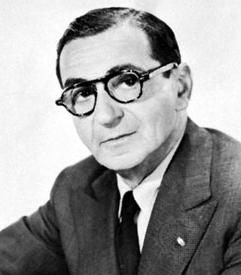
The song was written in 1918, and then set aside. Berlin thought it was “not appropriate” for the project he was working on.
It sat on a shelf for 20 years.
In 1938, Berlin wanted to find a song that properly expressed the peaceful sentiments that he felt America needed to hear. Kate Smith, who was perhaps the most popular American singer of her day, wanted a new song … and after trying to write a new one, Berlin remembered the song from 20 years ago. He asked his assistant to get it out of a trunk.
He tweaked a few lines, and it was the closing number on Smith’s radio show on November 10, 1938. It was an instant sensation, and Smith continued to sing it every week on her show. It was read into the Congressional record. There was a movement to make it our new national anthem … that Smith discouraged. But the popularity of the song was immense, and Smith continued to sing it.
The song was “God Bless America.”
Irving Berlin donated all his royalties, in perpetuity, to the Boy Scouts and Girl Scouts of America. He especially wanted those royalties to go to the areas in greatest need, and the money has gone to the New York Area Councils recently.
In the 70s, the song achieved a new level of popularity … as a hockey anthem. The Philadelphia Flyers adopted it as a good luck charm, and played it before many games … on their march to the Stanley Cup. They repeated that feat — along with a live performance by Smith — when they won the 1975 Stanley Cup. That was great for hockey, and great for Scouting.
Here’s a clip that recreates the national premiere of the song on Kate Smith’s # 1 nationally radio show. This dramatization was a part of “The is the Army,” a 1943 movie starring Ronald Reagan!
The 38th President of the United States, 1974 – 1977
AKA: Leslie Lynch King, Jr (his birth name), Jerry, Mr. Nice Guy
From: Nebraska, Illinois, Michigan
College: University of Michigan (class of 1935), Yale Law School (class of 1941)
Ford’s marriage to Betty was delayed until after his first election to the House, as he was not sure how the voters would feel about his marrying a divorced ex-dancer.
Married to: Elizabeth Bloomer Warren
Children: Michael Gerard, John Gardner, Steven Meigs, Susan Elizabeth
Party: Republican
Previous Jobs: waiter, dishwasher, boxing & football coach, lawyer, US Navy (Lieutenant Commander), US Representative, Vice President
In His Words:
Eagle Scout Gerald Ford, on Right
“I believe in friendly compromise. I said over in the Senate hearings that truth is the glue that holds government together. Compromise is the oil that makes governments go.”
“If you have not chosen me by secret ballot, neither have I gained office by any secret promises… I have not subscribed to any partisan platform. I am indebted to no man, and only to one woman — my dear wife — as I begin this very difficult job.”
“All my children have spoken for themselves since they first learned to speak, and not always with my advance approval, and I expect that to continue in the future.”
“I am acutely aware that you have not elected me as your president by your ballots, and so I ask you to confirm me as your president with your prayers.”
“It is believed that a trial of Richard Nixon, if it became necessary, could not fairly begin until a year or more has elapsed. In the meantime, the tranquility to which this nation has been restored by the events of recent weeks could be irreparably lost by the prospects of bringing to trial a former President of the United States. The prospects of such trial will cause prolonged and divisive debate over the propriety of exposing to further punishment and degradation a man who has already paid the unprecedented penalty of relinquishing the highest elective office of the United States.
NOW, THEREFORE, I, Gerald R. Ford, President of the United States, pursuant to the pardon power conferred upon me by Article II, Section 2, of the Constitution, have granted and by these presents do grant a full, free, and absolute pardon unto Richard Nixon for all offenses against the United States which he, Richard Nixon, has committed or may have committed or taken part in during the period from January 20, 1969 through August 9, 1974.”
Kinstler painted Ford ten times. “He wanted me to keep trying,” he said.
“The three-martini lunch is the epitome of American efficiency. Where else can you get an earful, a bellyful and a snootful at the same time?”
“I gave a speech in Omaha. After the speech I went to a reception elsewhere in town. A sweet old lady came up to me, put her gloved hand in mine, and said, ‘I hear you spoke here tonight.’ ‘Oh, it was nothing,’ I replied modestly. ‘Yes,’ the little old lady nodded, ‘that’s what I heard.'”
Not true: On September 8, 1974, Ford gave President Nixon a full pardon for any crimes he committed against the United States while President. This was extremely controversial. Critics claimed the pardon must have been some sort of corrupt bargain that had been struck between the two men before Ford was nominated as Vice President. All parties denied that there had been such a deal. The New York Times called it “a profoundly unwise, divisive and unjust act.”
Ford testified before Congress about the pardon; he was the first sitting President to do so since Abraham Lincoln.
In 2001, Senator Ted Kennedy said that he had opposed the pardon at the time, but in time he had come to the belief that history had proved that Ford had made the correct decision.
True: Ford is the only President who also earned the rank of Eagle Scout.
A star football player at the University of Michigan, Ford helped lead the team to two undefeated seasons and national championships. Ford became the only future President to tackle a future Heisman Trophy winner in 1934 when he tackled Jay Berwanger, who won the award in 1935.
President Johnson appointed Ford to the Warren Commission, who investigated the assassination of President Kennedy. He was an outspoken proponent of the single-assassin theory.
Ford was the first Vice President confirmed to office under the procedures outlined in the 25th Amendment. After Agnew’s resignation, Nixon had sought advice from senior Congressional leaders about whom he should choose as a replacement. House Speaker Carl Albert said, “We gave Nixon no choice but Ford.”
The Official Portrait: Among Everett Raymond Kinstler’s more than 1200 portraits are such well-known personalities as Tony Bennett, Carol Burnett, James Cagney, Betty Ford, Gene Hackman, Katharine Hepburn, Lady Bird Johnson, Paul Newman, Peter O’Toole, Gregory Peck, and John Wayne. Others include authors Arthur Miller, Ayn Rand, Tennessee Williams, and Tom Wolfe; Supreme Court Justices Ruth Bader Ginsburg and Harry Blackmun; business and government leaders such as John D. Rockefeller lll, Senator Daniel Patrick Moynihan, 6 U.S. Governors, four US Secretaries of State, and the presidents of universities and colleges including Brown, Harvard, Oklahoma, Princeton, Smith, Wellesley, Williams, and Yale.
Kinstler has painted more than 50 cabinet officers, more than any artist in the country’s history. Seven Presidents — Richard Nixon, Gerald R. Ford, Jimmy Carter, Ronald Reagan, George H. W. Bush, Bill Clinton and George W. Bush — have posed for him. His portraits of Ford and Reagan are the official White House portraits.
A tough campout for parents is to accompany their son on their first Boy Scout camping experience.
They find that the rules have changed. No longer are they in charge. No longer are they primarily responsible for their son. No longer do they set up the family tent for Mom, Dad, their son and other children.
Instead, a boy is in charge. The parents are “encouraged” to take a break, and let the boys do it. And that is often very, very hard — for the parents.
Scouting begins for many as a Tiger Cub. Your son is in first grade and a flyer comes home from school. Your son can join Scouts! You’ll go to a recruitment night, and there you learn that you’ll join Cub Scouts with your son … he must have an adult partner in Tiger Cubs. You’ll go to his Den meetings every week or two; you’ll go on outings with the other Tigers and their adult partners. It’s a blast.
Velda signed Christopher up for Tigers while I was on a business trip. I had left Scouting when I went to college in 1974 … I had never even heard of Tiger Cubs in 1989!
What I soon discovered is that Scouting had expanded the program to include first graders. At the time, I was traveling extensively for my job, so Velda was Christopher’s adult partner and attended most of the meetings and monthly field trips. She loved it almost as much as Christopher did: he had a wonderful time! I attended a couple of meetings, and I remember feeling a little lost. Pack meetings helped get me in the swing of things, though, and by the next year, we were ready to volunteer our time to build the Pack up.
Cub Scout campouts are about families. This campout was in the Sequoia National Park at Camp Wolverton. I’ll never forget the Cub Scout’s big sister that thanked me: she had never been to a real campfire before.
Velda became a Den Leader and I became the Pack Treasurer. We were all in, having fun with the kids, planning events and making sure the boys — including our sons — had a fabulous time at every meeting. For the youngest boys, that is especially important. Cub Scouting is a family event. Velda was the Wolf & Bear Den Leader for both of our boys; I was the Webelos Den Leader, Committee Chair and then Cubmaster. The Pack grew from 9 boys to 60+ boys. We did many, many campfires and campouts. Our garage had a permanent table and benches for the twice-a-week Den meetings. As I said, we were all in.
As the boys grow from Wolf to Bear to Webelos (2nd to 3rd to 4th grade), the parents’ role does subtly change. At the beginning, parents are with their son at every meeting, every event. As the boys enter third grade and begin work on their Bear badge, parental attendance often becomes more optional. Note that their participation is not an option, but there are times they can physically miss a meeting. The Pack provides trained, adult leadership — and backups — to make sure that the boys are motivated, educated, entertained and well supervised. The boys will spend time with their peers and learn to follow Akela … their leader.
At the same time, parents will contribute in the way they can best contribute. Some are Den Leaders or assistants … and some help to set up the chairs before a meeting. Helping set up meetings or bring snacks are also important tasks that help make the Pack run smoothly.
The boys in Cub Scouts learn a dizzying array of skills. They will learn how to be responsible. They’ll learn first aid. They’ll learn about our country. They’ll even learn how to communicate with their parents. And, they’ll get to do Scouting stuff, too: sing songs, camp out and build campfires. The boys will have a GREAT time, and they’ll do it with their family. My daughter still says she was a Cub Scout — she went to every Den Meeting, she went on every outing. Note that she is in the middle of the Cub Scouts in the campout picture, above. Cub Scouting is about family.
Every Cub Scout learns the motto: Do Your Best. And they have fun as they do their best, learning how to use a pocket knife, how to tell a tall tale, how recycling works and how to bake cookies.
As the boys transition to Boy Scouts, however, they learn a new motto. As a Boy Scout, they must “Be Prepared.” It’s no longer acceptable to simply do their best — now they must be ready for all challenges that come their way.
And that takes us back to their first campout. It’s five years after your little boy became a Tiger Cub, and their world has changed.
It’s inevitable, really. Families go on Cub Scout campouts, and Moms & Dads are in charge. They set up the tents. They make sure everything gets done. When the boy goes to Boy Scouts, however, that all changes. Who runs a Boy Scout troop? The boys.
When that fifth grade boy, 10 or 11 years old, goes on that first campout with a well-run troop, he will answer to his Patrol Leader, often a 13-year old boy, who has taken on the responsibility to teach the new Scouts in Patrol. That 13-year old Patrol Leader, in turn, reports to a Senior Patrol Leader who is the elected boy leader of the Troop. The SPL is in charge of the outing. He will consult with the adult leaders of the troop when he needs to … and the adult leaders will advise him as they need to.
Boy Scouts learn a lot from adults, of course … but I have always felt they enjoy learning skills from older boys much more. That is good on two levels: both the students and the teacher are enriched by the experience.
The parents aren’t in charge. They’re not in their son’s Patrol. They are not in charge of the Patrol Leader or the training that their son will receive. The parents are welcome at the campout, especially at a first campout. However, their role is not to set up their son’s tent. They should not camp overnight with the Patrol — they will camp in the adult section of the campsite.
One of the goals of Boy Scouting is for the boys to learn leadership skills. They do that by leading younger boys and teaching them Scout skills. As boys advance in rank, they will learn how to set up their own tent. They’ll learn what makes a good site for that tent. And they’ll learn how to cook their own meals. And then they will teach those skills to younger boys as they join the troop.
Parents should be a part of the adult leadership of the troop. Typically that goes in one of two directions: the Scoutmaster and his assistants, who help the boys plan and implement the events the troop participates in, or the troop committee that does everything from budgeting to transportation planning.
As our boys joined their troop, I went along with them and became an Assistant Scoutmaster. Velda decided that she would not formally volunteer as an adult in the troop, but she did help with transportation and other volunteer tasks as needed.
However, even as I continued to be “very” involved, I still made sure that I gave my boys plenty of room to grow on their own. As one example, the troop did an extended Alaska trip with floating, fishing and camping. I did not go on this outing, but both of our sons did. They had a great time, and I’m certain they experienced things differently with me not there.
And that is a wonderful thing. Boys need to learn to be self-reliant as they grow from 2nd graders to 9th graders. How are they going to do that if their parents are at every outing, every event? By not going to Alaska, I helped the boys grow up.
And that, ultimately, is the role of parents. The Scouting program can help, as I know it did for me in Maitland, Missouri’s Pack 58 and Troop 58, and as I know it did for my sons in Pack 575 and Troop 2 in Saugus, California.
The beauty of the Antelope Valley in the spring. The snow-capped San Gabriel mountains are in the background; Mount Baden Powell is the tallest peak. A flower called, appropriately enough, goldfield, gives the golden color which is broken up by red stemmed filaree. Creosote bushes are in the foreground; small joshua trees are in the distance. April 5, 2011.