Archive for December 2013

Velda, on a happier day, with Payton.
When your significant other calls to you after an incident … you know when there is something wrong. You know what I’m talking about. When they call, their voice is different.
Different enough that you actually pay attention to what they’re saying (or maybe that’s just me).
Different enough that you get an adrenalin rush when they call your name.
Different enough that you prepare for anything – anything – that you might need to do.
In two days, Velda has done this twice.
Twice.
And that is quite enough, m’lady.
Angry At Plastic
Last night, she was preparing dinner, making lotion, and flitting about the kitchen with too much on her mind. She was making Pasta Carbonara when she couldn’t get the garlic out of the Ziploc bag.
It. Wouldn’t. Open.

Velda didn’t get the fruit arrangement quite right … but then, no knives or plastic bags were involved. Just Walter.
She violently tore the bag open, and her hand flew across the cutting board only to contact the blade of her newly sharpened Santoku knife, neatly fileting the skin on the middle knuckle of her middle finger. She said it was the worst cut she has sustained while cooking.
And she wasn’t even holding the knife.
She called my name, and I came running. Of course.
She assured me that she did not require stitches. She said so each time I asked. 5 times. I did supervise her first aid, got her the appropriate antibiotic ointment and knuckle Band-aid. And then I went out to get her more knuckle Band-aids.
Did I come running when she called? You bet.
“Mercy”
The incident this morning is much darker in nature, unfortunately. She called me shortly after 9am, after arriving at her place of employment (she’s a nurse practitioner, stationed at a skilled nursing facility, AKA nursing home). She told me that a gunman had entered the nursing home, shot his sister – a patient – and then told a nurse that he would wait for the police to show up.

Velda, completing the Turkey Trot in San Dimas last month. I couldn’t be prouder.
She called me while this was going on. While the gunman was still loose in the facility. While her safety was my only concern … and she refused to leave. She called me again after the police arrived and took the gunman into custody. No one was in danger after the shooter shot his sister, come to find out.
One of the news reports, below, is calling this a mercy killing. I’ll leave that judgement to God. What I do know is this:
- Velda called her boss right after she called me, and got her boss and her boss’ boss to the nursing home quickly.
- She helped the bosses craft a communication strategy, and the team now on site began telling their patients and patients’ family members what had happened ASAP. They didn’t wait for corporate permission – they just did the right thing and started communicating.
I couldn’t be prouder. I could be a little more happy with her … after all, she called me with that voice and then refused to come home as soon as possible. Rather, she stayed on site and took care of her patients.
I’ll forgive her for that. After all, she called me first.
More
SCVNews.com: SCV Man Arrested….
LA Times: Man Kills Wife, Then Goes To Nursing Home….
HomeTownStation: Santa Clarita Shooting Death….
Being Human

Children stage a patriotic demonstration. Southington, Connecticut, May 1942. Reproduction from color slide. Photo by Fenno Jacobs. Prints and Photographs Division, Library of Congress

Washington, D.C., circa 1925. “Family group listening to radio.” A baseball game, maybe. The original caption label for this one has been lost. Shorpy Historical Photos.
More
Shorpy Historical Photos: Home Entertainment: 1925
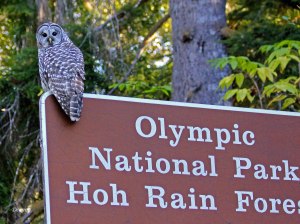 Where Is It: It’s right outside of Seattle … and the Park is surrounded by Highway 101. Depending on where you’re going, the distance could be about 80 miles, or twice that.
The Birth: The Mount Olympus National Monument was created in 1909 by President Theodore Roosevelt. President Franklin Roosevelt designated it a National Park on June 29, 1938.
It Happened Here: The interior of the Park was first explored with the support of local newspapermen, and many peaks today bear the names of prominent editors and publishers of the late 19th century. These include Mt Meany (Edmond Meany was an editor at the Seattle Press), Mt Dana, Mt Lawson, Mt Noyes, Mt Scott and the Bailey Range.
Size: 922,650 acres
# Visitors: 2,824,908 in 2012. Peak month was August; January was the least attended.
Plants: Over 1,450 types of vascular plants grow on the Peninsula, nearly the same number as the British Isles—an area 30 times larger.
Animals: From the Park’s website:
Old Growth Refuge
The park is a rare refuge for species dependent on old growth forests, including some species protected under the Endangered Species Act. Olympic provides one of the last remaining large tracts of intact primeval forest in the lower 48 states. These moist forests provide essential habitat for northern spotted owls, marbled murrelets and a variety of amphibians.
A Unique Community
The wildlife community of the isolated Olympic Peninsula is also unique. This community is noteworthy not only for its endemic animals (found only here), but also for species missing from the Olympics, yet found elsewhere in western mountains. Pika, ptarmigan, ground squirrels, lynx, red foxes, coyotes, wolverine, grizzly bears, bighorn sheep and historically, mountain goats, did not occur on the Olympic Peninsula. Meanwhile, endemic species like the Olympic marmot, Olympic snow mole and Olympic torrent salamander are found here and nowhere else in the world!
Choices: From the Park’s website:
With three major ecosystems and almost a million acres to choose from, Olympic National Park is filled with possibilities. One of the key challenges that visitors face is how to tackle all of these choices – but we’re here to help!
Our first recommendation is to start your visit at a Visitor Center and get the most current park information. Ranger program times, opening and closing schedules, tides, weather, road conditions, and many other factors can influence your visit. An informed visitor is a happy and safe visitor!
Here are some other tips:
- Pick up a copy of the Bugler park newspaper. It is published twice annually, to target the summer and winter seasons. Click here for the digital PDF version.
- Plan your park activities with time and distance in mind. The park is very large and can be accessed by vehicle only in certain areas. Think of the access roads like spokes of a big wheel, with Highway 101 as the wheel’s rim.
- Consult the park’s mileage chart for distances between key destinations, and note that in many areas reduced speed limits and winding, two-lane roads may increase your travel time. Click here for some recommendations based on your available time (a few hours, a day, or multiple days).
- Call the Olympic National Park Visitor Center at (360)565-3130 for the current status of park roads, facilities, and campgrounds.
- Time permitting, we recommend that you try to sample destinations within each of the park’s major ecosystems: sub-alpine, coastal, and forest (which can be further sub-divided into lowland forest and the famous temperate rainforest).
- Check the park’s Event Calendar for interesting programs and activities
- Don’t spend all of your time at Olympic in the car! There are hundreds of trails, viewing points, and other opportunities to experience the park beyond your windshield. Take a walk in the woods, watch for wildlife, or listen to a river. Even if it’s a five minute stop at a pull-out, don’t miss the opportunity.
Fees: $15 per car entering the park. Individuals are $5.
Staying There: There are 2 lodges, 2 resorts, and only 17 campsites in Olympic National Park.
Contact Info:
600 East Park Avenue
Port Angeles, WA 98362-6798
(360) 565-3130

From the Park’s website.

Bobcat. From the Park’s website.

From the Park’s website.

From the Park’s website.

From the Park’s website.

From the Park’s website.

From the Park’s website.

From the Park’s website.

From the Park’s website.

From the Park’s website.

Purple Crab. From the Park’s website.

From the Park’s website.

From the Park’s website.

From the Park’s website.

Northern pygmy owl. From the Park’s website.

Black turnstone. From the Park’s website.

Varied thrush. From the Park’s website.

Red-breasted sapsucker. From the Park’s website.

Great blue heron. From the Park’s website.

Male sooty grouse. From the Park’s website.

Northern Flicker. From the Park’s website.

From the Park’s Facebook page.

From the Park’s Facebook page.

From the Park’s Facebook page.

From the Park’s Facebook page.

From the Park’s Facebook page.

From the Park’s Facebook page.

From the Park’s Facebook page.

From the Park’s Facebook page.

From the Park’s Facebook page.
More
National Park Service: Olympic National Park
NationalParksTraveler.com – Photography in the National Parks: Winter Essentials
TerraGalleria.com: Olympic

Mrs. Viola Sievers, one of the wipers at the roundhouse giving a giant “H” class locomotive a bath of live steam. Clinton, Iowa, April 1943. Reproduction from color slide. Photo by Jack Delano. Prints and Photographs Division, Library of Congress

The iconic Arctic National Wildlife Refuge is home to polar bears, moose and caribou. It was established Dec. 6, 1960. In 1980 the federal government expanded it to its current 19.6 million acres, almost half of which are wilderness. Photo: Last Lake on Sheenjek River, Arctic Refuge, by Steve Hillebrand/USFWS, tweeted by the US Department of the Interior, 12/6/13.

Utah’s Rainbow Mountain Wilderness, tweeted by the US Department of the Interior, 12/04/13.
 Where Is It: The Park shares its border with Canada for 55 miles. It is 15 miles east of International Falls, MN and 300 miles north of Minneapolis-St Paul.
The Birth: The Minnesota Legislature passed a resolution in 1891 requesting that the President create a national park. It was nearly 80 years later that President Richard Nixon signed the resolution creating the Voyageurs National Park on January 8, 1971.
It Happened Here: From NationalGeographic.com:
The park is named for French Canadian voyageurs who paddled birchbark canoes for fur trading companies in the late 18th and early 19th centuries. The voyageurs were famous for stamina—paddling up to 16 hours a day—and roisterous songs. Their canoe route between Canada’s northwest and Montreal is cited as part of the U.S.-Canada border in the treaty that ended the American Revolution.
In a boat in the labyrinth of waterways and islands, you can unwittingly cross this border. Be sure to take along a high-quality map that includes navigational markers to tell you where you are.
Size: 218,054 acres; more than 1/3 are water
# Visitors: 214,841 in 2012. July had peak attendance; November was the least-attended month.
Plants & Animals: Here is a comprehensive checklist of all species known to be in the Park.
Choices: From Wikipedia:
Unlike many other National Parks, where the main access to the park is by automobile or by foot, the primary access to the park is via water. Many visitors travel by canoe and kayak. Others rent house boats. The park has three centers where visitors can obtain information about the park, view films, and see exhibits about the park’s geology, wildlife, plants, and history.
-
Rainy Lake Visitor Center – is open all year and is located 12 miles (19 km) east of International Falls at the end of Koochiching County Road 96, which is located off of State Highway 11, leaving International Falls.
-
Kabetogama Lake Visitor Center – is located in the Kabetogama community on the southwestern edge of the park. This center is open seasonally. It can be reached, just 3 miles (5 km) off of US Highway 53 on Saint Louis County Road 122 and Saint Louis County Road 123.
-
Ash River Visitor Center – is on the parks southern boundary just north of the community of Ash River. It can be reached, just 11 miles (18 km) from US Highway 53 on the Ash River Trail, Saint Louis County Road 129, taking the park road 1 mile (2 km) before reaching Ash River.
Fees: There are no entrance fees to the Park.
Staying There: In 2014, 30 campsites will be on a new, paid reservation system. The other sites (about 140) continue to be free.
Contact Info:
360 Highway 11 East
International Falls, MN 56649
218-283-6600

Tweeted by the US Department of the Interior, 11/4/13.

From the Park’s website.

From the Park’s website.

From the Park’s website.
More
National Park Service: Voyageurs National Park
Midwest With Zest: Emergency Snuggling

 This weekend I had an interesting conversation with a friend who is a speech pathologist. We both work in schools with active anti-bullying programs. Because we are both employed by public schools, we had to receive training to recognize the different types of bullying and how to prevent them.
We’ve seen young children ‘test’ mean statements on one another. After the child sees a classmate or playmate become visually upset, he usually knows that mean behavior isn’t acceptable. The child usually feels guilty. He or she notices that bullying words have a negative effect, thus preventing further bullying. The internet has changed this learning dynamic. When a child practices bullying online, he or she doesn’t get to see the hurt they’ve caused. They don’t suffer the negative repercussions. So what would trigger a psychological reaction to prevent future bullying? Nothing.
 So why is this important today? To start, social media use is at an all-time high. A Pew Research Center study of teen and adult social media use shows that 81% of teens are using some form of social media: Facebook, Twitter, Instagram, YouTube, etc. While I celebrate the technological literacy in teens, I mourn the amount of cyber bullying that is running rampant on the internet. In October, a 12-year-old girl took her own life after being bullied by two of her female classmates. These girls repeatedly told her that she was ugly, that no one liked her, that she should kill herself…so she did. Without adult supervision on the internet, teens can say and do what they want. Teens are even finding new social media sites because they’re trying to avoid their parents on Facebook.
So what can we do? It is our job as adults (and mine as an educator) to prevent bullying, both online and in person. If your child approaches you with a problem, LISTEN. It may not be the usual teenage drama. Watch for extreme changes in behavior (Note: I know that teens are bursting with hormones, but I’m not making a joke here. Extreme changes.). I know your child wants privacy, but safety needs to come first. In my short time as a teacher, I’ve seen too many teens terrorize one another over the internet, especially in junior high and high school. Coach your child on his or her options to remove a bully from their social media sites. Facebook allows you to delete friends and block them. You can report bullying to HR and have the bully’s account suspended. Instagram and Twitter have similar security measures. If a teen is being bullied over text messages, you can have the number blocked. Be open and honest with your teen. It may seem like an overreaction to go to such measures, but if it saves a child’s life, it’s worth it.
Remember, bullying and teasing are two different things. When a teen is bullying another teen, those words are designed to hurt. The internet is a great place to completely slander another person without having to suffer any consequences. A screen can’t show emotion, a screen doesn’t show an emotional reaction. Cyber bullies can hide behind anonymity and distance to do permanent psychological damage. Don’t let that damage become part of your child’s life.
Where Is It: The Park is very remote. You can’t drive there; you must take a plane. Commercial airlines provide service from Anchorage to Kotzebue, or from Fairbanks to Bettles. Once in Kotzebue or Bettles, you must fly to the park with authorized air taxis.
The Birth: This park was one of 15 new properties established by the Alaska National Interest Lands Conservation Act (ANILCA) of 1980. President Jimmy Carter first declared it a national monument in 1978 using the Antiquities Act. Congress eventually passed the ANILCA bill in 1980, and Carter then re-designated the Monument as Kobuk Valley National Park on December 2, 1980.
It Happened Here: Over 30 prospectors’ camps were established during a short gold rush in 1899–1900. Surveys have not yet located the sites, though fragments of the miners’ boats have been found.
Size: 1,750,000 acres.
# Visitors: A record of 29,550 visitors came to the Park in 2012. September was the peak month.
Plants: From the Park’s website:
The southern boundary of the park is 35 miles above the Arctic Circle. The boreal forest reaches its northern limit here, resulting in an open woodland of small trees in a mat of thick tundra. The Kobuk River winds its way slowly through the park for 61 miles.
Animals: The largest caribou herd in Alaska – about 490,000 animals – travels through this area during its migration.
Choices: From NationalGeographic.com:
Summer is the best time to visit. Days are long (from about June 3 to July 9 the sun doesn’t set), and temperatures in many places can reach into the 80s or higher. Ice breaks up on the Kobuk River in May and begins to reform by mid-October. Mid-June to late July is best for wildflowers. August can bring rain and September snow. In late August, the aspens begin to turn yellow and the tundra red, and the caribou migration begins.
Fees: There is no entrance fee.
Staying There: There are no campsites or developed lodging areas in the Park. Primitive camps are made on the tundra or near the river, where a rapid rise in water flow can make those campsites hazardous.
Current Issues: From the National Parks Conservation Association:
Kobuk Valley National Park is home to the only active sand dunes within the Arctic Circle. The Great Kobuk, Little Kobuk, and Hunt River Sand Dunes have shrunk to 25 square miles. At one time, they covered twelve times as much area.

From the Park’s website.

Wikipedia.

In late August and early September, visitors to Kobuk Valley National Park in Alaska can watch caribou in striking autumn pelage as they swim across the river. Huge antlers and white ruffs mark the bulls. Photograph by Nick Jans/Photo Library

In late August and early September, visitors to Kobuk Valley National Park in Alaska can watch caribou in striking autumn pelage as they swim across the river. Huge antlers and white ruffs mark the bulls. Photograph by Nick Jans/Photo Library

In late August and early September, visitors to Kobuk Valley National Park in Alaska can watch caribou in striking autumn pelage as they swim across the river. Huge antlers and white ruffs mark the bulls. Photograph by Nick Jans/Photo Library. National Geographic.

Quaking Aspen groves dot the landscape between the Kobuk River and the Great Kobuk Sand Dunes. The aspens grow on old dune fields that are now covered in plants. From the Park’s website.

This pretty but unassuming flower is quite special. Oxytropis kobukensis grows in only one place in the world – in the Kobuk Valley on and around the sand dunes. From the Park’s website.
More
National Park Service: Kobuk Valley National Park


