Where Is It: Haleakala is on the island of Maui in Hawaii. It’s a five-and-a-half hour plane ride from Los Angeles (2,494 miles), but oh, is it worth it.
The Birth: The word Haleakala is Hawaiian for “house of the sun.” A Hawaiian legend stated that Maui, a demigod, imprisoned the sun in the volcano to lengthen the day. The Haleakala volcano last erupted sometime between 1480 and 1600 AD.
An area including the volcano’s summit down to the southern shore of the Pacific, as well as two volcanoes on the island of Hawaii, was originally created as the Hawaii National Park in 1916. The volcanoes on the island of Hawaii were made into a separate National Park in 1961.
It Happened Here: Bicycling down from the Haleakala summit is a unique way to see the island of Maui. Tour operators used to pick people up at their hotels, deliver them to the summit parking lot in the National Park, and then lead them down the 27-mile, 10,000′ slope to the ocean. After many fatal accidents involving cyclists on the twisting mountain road, in 2007 the Park suspended all bicycle tours within the park boundaries … so now tour operators have to start outside the Park, at 6,500′. Watch out for them as you drive up!
Size: 33,265 acres
# Visitors: 1,094,668 in 2012 – just about half of the visitors attracted in 1999. Visitation is relatively steady month-to-month, but July and August are typically the biggest months, with February and March the smallest. Interestingly, only one in six visitors to Maui also visit the National Park. Most people are making a big mistake!
Plants: Once plants and animals were brought to the Hawaiian island (the most remote island chain on earth), each species had to develop special adaptations in order to survive in their new climate. As a result, many species are unique to the islands, and rare. More endangered species live in Haleakala National Park than in any other National Park in the United States. As people have come to Maui and the National Park, some of these species have suffered. It is said that the silverswords, known to native Hawaiians as ahinahina, used to cover the summit of Haleakala Mountain to a degree that the mountain looked as if it were covered with snow.
Animals: The Hawaiian Petrel, AKA ‘Ua’u, is an endangered species with a large nesting colony atop the Haleakala summit. They are migratory seabirds that fly at night and are believed to navigate by stars. The state bird of Hawaii, the endangered Hawaian Goose, AKA nene, also nests at Haleakala.
Choices: The summit of the volcano is a totally different experience than the lush tropical forest at the shoreline. You’ll need to spend two different days to appreciate the top and bottom of the park: to drive from the summit to the Kipahulu station takes about 6 hours round trip.
Fees: The park is open daily; a 7-day pass is $10. Hold on to your pass; you’ll need to visit the shore and the summit on different days.
Staying There: There are no hotels in the Park. There are three primitive wilderness cabins available through a lottery for rental. To reach the cabins, you must hike at least four miles (Holua) or more (six to Kapalaoa and ten to Paliku). Wilderness camping is also available by permit only, and group sizes are strictly limited. Water may not be available in the crater, and won’t be potable without filtration.
Contact Info:
PO Box 369
Makawao HI 96768
(808) 572-4400
Current Issues: Many native Hawaiians fought the expansion of the observatory complex on the summit of Haleakala, but to no avail. Construction has now begun on a massive, $300 million telescope atop the summit which should be completed by 2020. Construction of the Advanced Technology Solar Telescope began late in 2012 after several years of delays caused by the controversy.
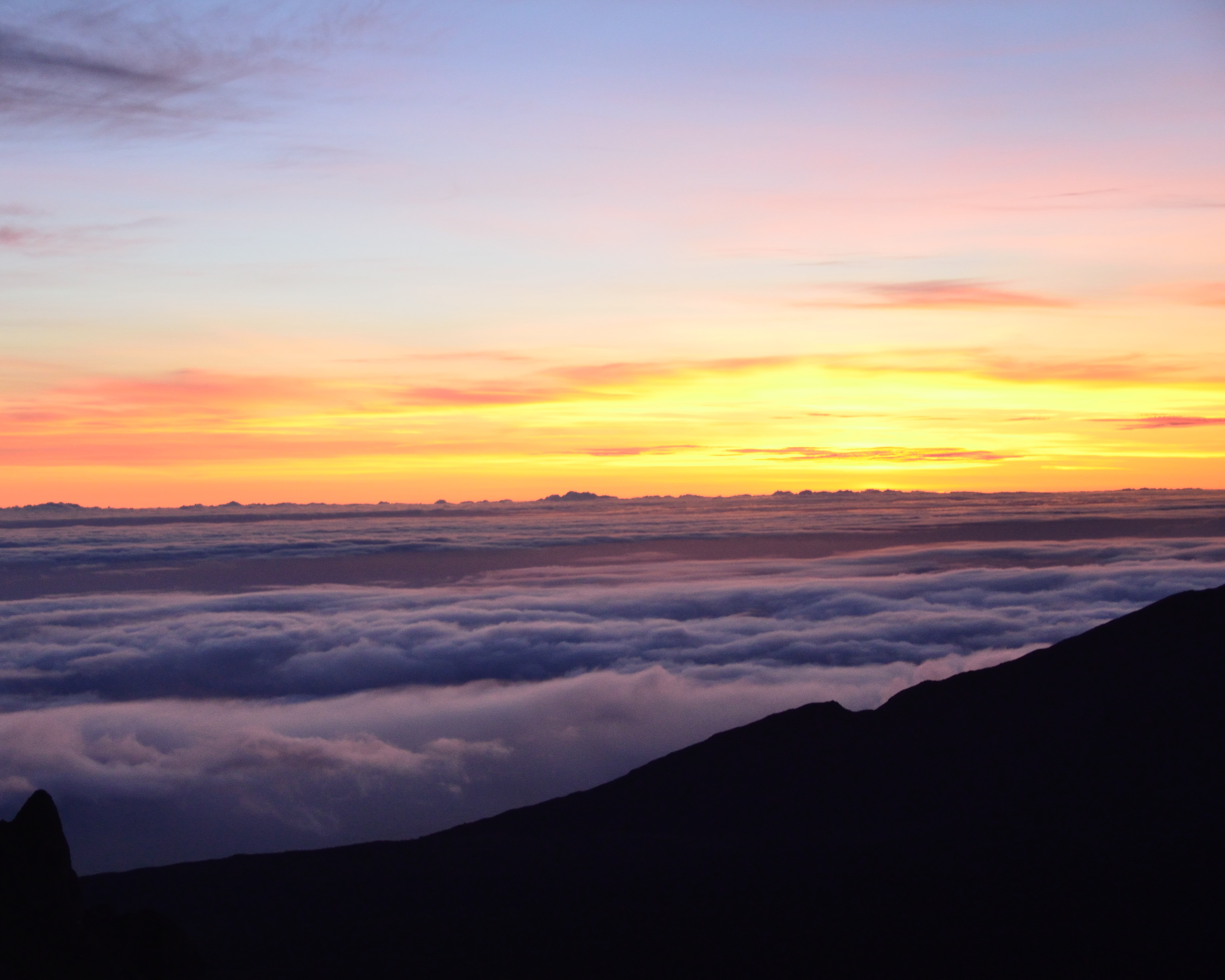
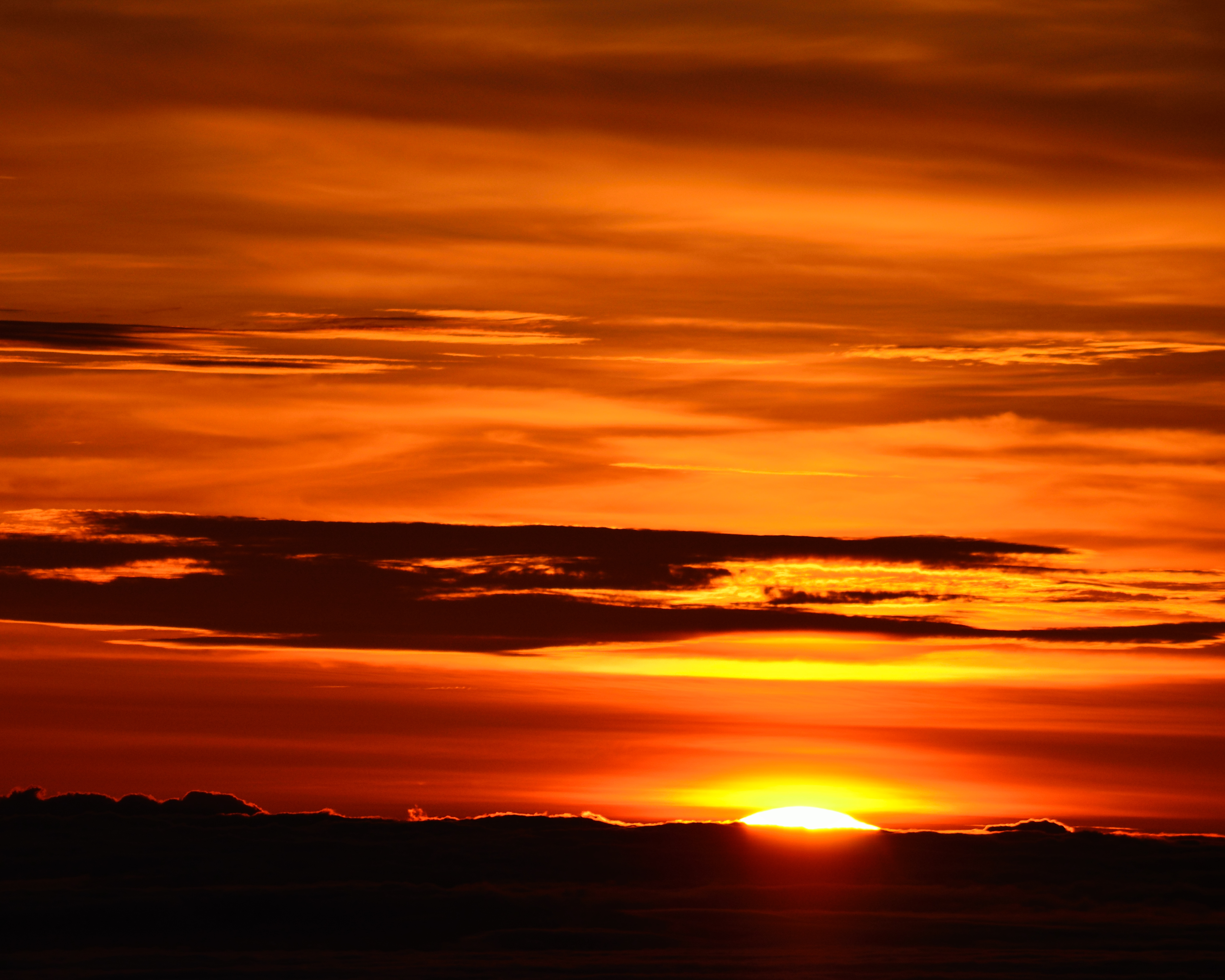
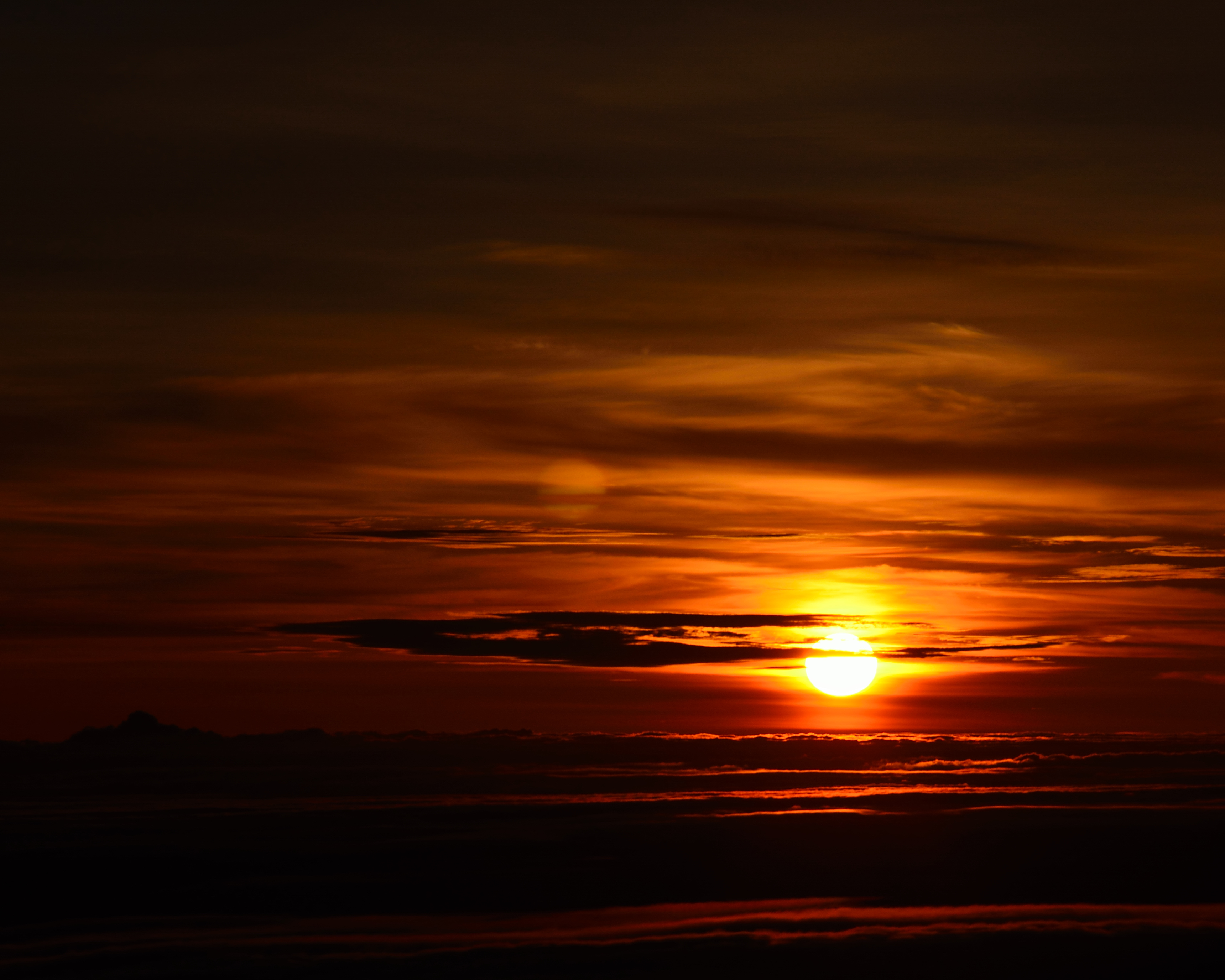
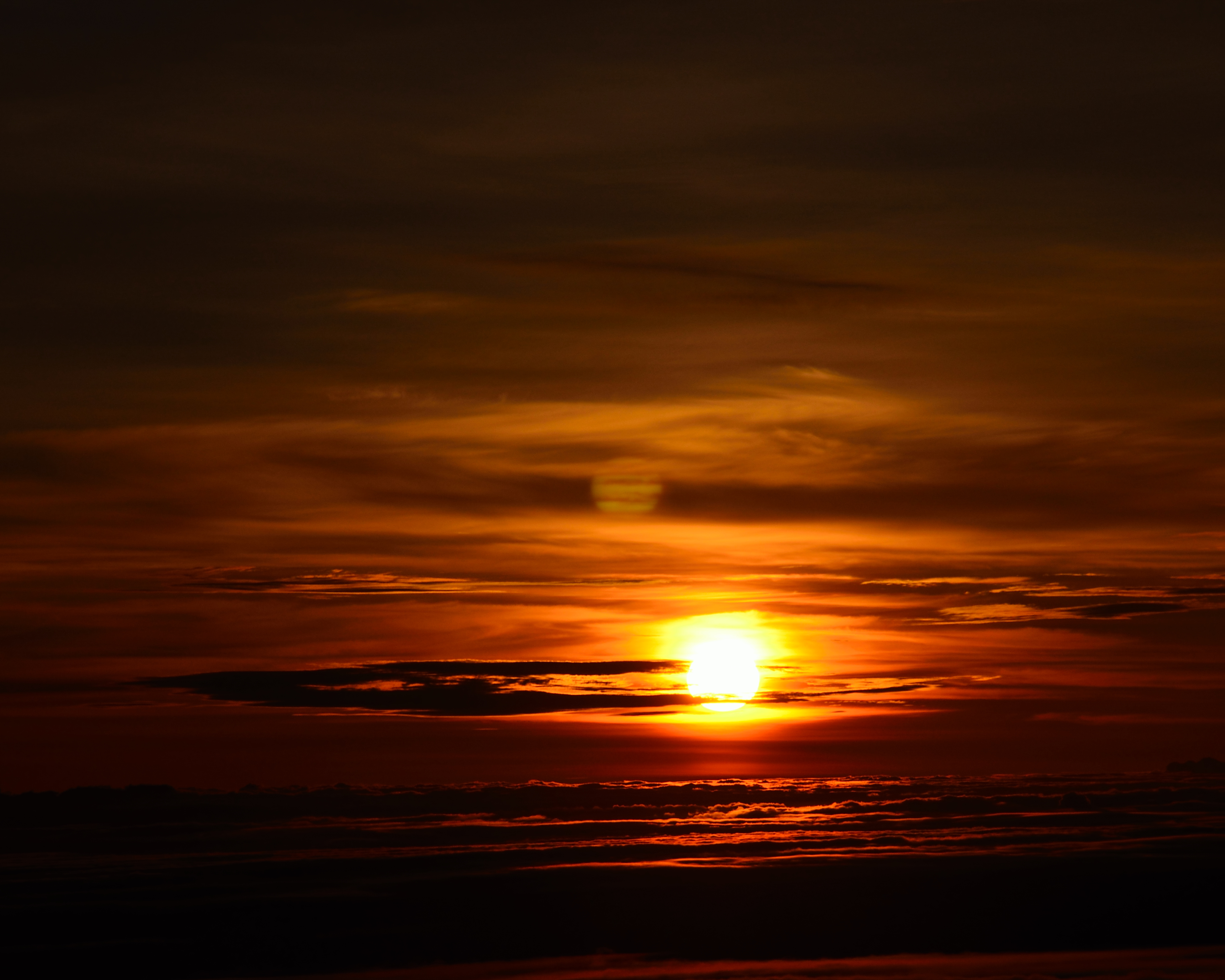
Don’t Miss This: You need to watch the sun come up over the crater, which I photographed in 2010. The link for The Haleakala Adventure is below.
The views for sunset are just as spectacular. It is said that if you see your shadow on the clouds during a sunset, then you will have wonderful luck.

Sunrise over Haleakala, 2011.

Silversword. Photo from the Haleakala National Park Facebook page.

Silversword. Photo from the Haleakala National Park website..

Photo from the Haleakala National Park Facebook page.

Photo from the Haleakala National Park Facebook page.

Photo from the Haleakala National Park Facebook page.

Nene on the road. Obey the speed limits and keep these endangered birds safe! Photo from the Haleakala National Park Facebook page.

You understood the cabins were rustic, right? Photo from the Haleakala National Park Facebook page.

The Pueo or Hawaiian short-eared owl is the only owl endemic to the Hawaiian Islands and is considered an ʻaumākua or guardian spirit in the Hawaiian culture. The Pueo inhabit the forests and grasslands throughout the islands and are diurnal, meaning they are active during the day. Pueo are susceptible to the same threats as the other native birds such as habitat degradation or loss, disease, and predation from mammals such as mongoose as the owl’s nests are found on the ground leaving eggs and young birds vulnerable. When visiting the summit district of Haleakalā, keep an eye out for one of these beautiful birds as you drive through the cattle ranch outside of the park to the park entrance station as they may be silently gliding through the air hunting a mouse, insects, or other birds for its next meal. From the Haleakala National Park Facebook page.

Photo from the Haleakala National Park Facebook page.

Photo from the Haleakala National Park Facebook page.

Photo from the Haleakala National Park Facebook page.

Photo from the Haleakala National Park Facebook page.

Photo from the Haleakala National Park Facebook page.

Waimoku Falls. Photo from the Haleakala National Park Facebook page.

The “Seven Sacred Pools” (they aren’t sacred, and there aren’t seven), formed by the Palikea Stream. 2011.

The ocean here is treacherous and shark-infested.
More
Maui: Haleakala Crater
Maui: The Seven Sacred Pools
The Haleakala Adventure
National Park Service: Haleakala National Park
National Park Service: Kipahulu Coastal Strand Plants
National Park Service: Crater Aeolian Desert Plants
We wanted our first trip to Maui to be special, so we did our research.
I told Velda one option was to watch the sun rise above the Haleakala volcano, knowing that Velda would never approve that idea. I’m the early riser. She’s the late riser. So on vacation, would she want to get up early enough to see the sun rise?

This is one of a series of guidebooks that I highly recommend to anyone planning a trip to Hawaii. Andrew Doughty has a book about each of the islands, and he’s an entertaining read as well as an informative one. You need these books. About $15 on Amazon.
Absolutely.
If you’re going to Maui, I think this is one of the 5 things you MUST do. Here are the 5:
- Go find the World’s Best Banana Bread
- Take the Road to Hanna
- Eat at Lahaina Grill
- Go to Warren & Annabelle’s Magic Show
- See the sun rise over the Hale’akala Volcano
Now, of course, there are many, many other things you should do. Cook fresh fish on the grill, drink your favorite beverage on the beach, see every gorgeous sunset (which is every one) … many things to do. But this is the story of Haleakala.

Velda was blanket-wrapped with multiple layers, including her UCLA hoodie. She regretted not having gloves, and wearing Capris instead of long pants.
To enjoy the trip, it’s all about the prep. Know this: it will be cold at the summit. Bring layers of clothing. Long pants, gloves, hat, heavy socks, shoes. Yes, you’re going to a tropical paradise, but the summit of Haleakala is 10,023′ above that paradise. You’ll be in the dark, faced into a stiff wind, and it will be bone cold. Be prepared, or you won’t enjoy this wonder.
Get the car ready the day before, with a full tank of gas. Have breakfast preset, or eat in the car. We got up at 2:30 am in order to get to the summit before sunrise, and we did not get there any too early. We had time to get there, figure out what we should be doing, take a bathroom break, and then claim our spot on the observation rail.
When you arrive, the parking lot is pitch black. You really just have to know where you’re going. You can just go to the east … which is the larger, lower observation position. There’s also a gate that’s opened a few minutes before sunrise, allowing you to go to the upper observation area near the Haleakala Observatory. It’s higher, but the view of the sunrise is pretty comparable. (After sunrise, make sure you go there to see the silverswords.)
I brought a monopod to steady my DSLR. I held it steady against the metal handrail (I was there in time to get in the front row). Some of the photographers did bring tripods, but I was fine on the monopod; the slowest exposure below is the first one, which was 1/30 of a second. The pictures below are not color enhanced.
You watch the sun rise above the edge of the Haleakala crater. You stand above the clouds, and watch the sunrise. The views are simply astonishing.

 Where Is It: Haleakala is on the island of Maui in Hawaii. It’s a five-and-a-half hour plane ride from Los Angeles (2,494 miles), but oh, is it worth it.