Archive for September 2013
Ingredients
- 1 package active dry yeast
- 5 – 5-1/2 cups all-purpose flour
- 1 cup Sourdough Starter
- 3 tbsp sugar
- 2 tbsp butter
- 1/2 tsp baking soda
- 1/4 cup yellow cornmeal
Instructions
In large mixer bowl, soften yeast in 1-1/2 cups warm water (110*). Blend in 2 cups of the flour, Sourdough Starter, sugar, butter and 2 tsp salt. Combine 1 cup of the flour and the soda; stir into flour-yeast mixture. Add enough remaining flour to make a moderately stiff dough.
Knead on floured surface until smooth (5-8 minutes). Place in greased bowl; turn once. Cover; let rise till double (1 – 1-1/2 hours).
Punch down; divide in half. Cover, let rest 10 minutes. Shape into 2 oblong or round loaves.
Place on greased baking sheet sprinkled with cornmeal. Cover; let rise till almost double (about 1 hour). Brush with water and make diagonal slashes across tops. Bake at 375* for 30 to 35 minutes. Remove from sheet, cool.
****
From The Mowry Cookbook.
 Where Is It: Haleakala is on the island of Maui in Hawaii. It’s a five-and-a-half hour plane ride from Los Angeles (2,494 miles), but oh, is it worth it.
The Birth: The word Haleakala is Hawaiian for “house of the sun.” A Hawaiian legend stated that Maui, a demigod, imprisoned the sun in the volcano to lengthen the day. The Haleakala volcano last erupted sometime between 1480 and 1600 AD.
An area including the volcano’s summit down to the southern shore of the Pacific, as well as two volcanoes on the island of Hawaii, was originally created as the Hawaii National Park in 1916. The volcanoes on the island of Hawaii were made into a separate National Park in 1961.
It Happened Here: Bicycling down from the Haleakala summit is a unique way to see the island of Maui. Tour operators used to pick people up at their hotels, deliver them to the summit parking lot in the National Park, and then lead them down the 27-mile, 10,000′ slope to the ocean. After many fatal accidents involving cyclists on the twisting mountain road, in 2007 the Park suspended all bicycle tours within the park boundaries … so now tour operators have to start outside the Park, at 6,500′. Watch out for them as you drive up!
Size: 33,265 acres
# Visitors: 1,094,668 in 2012 – just about half of the visitors attracted in 1999. Visitation is relatively steady month-to-month, but July and August are typically the biggest months, with February and March the smallest. Interestingly, only one in six visitors to Maui also visit the National Park. Most people are making a big mistake!
Plants: Once plants and animals were brought to the Hawaiian island (the most remote island chain on earth), each species had to develop special adaptations in order to survive in their new climate. As a result, many species are unique to the islands, and rare. More endangered species live in Haleakala National Park than in any other National Park in the United States. As people have come to Maui and the National Park, some of these species have suffered. It is said that the silverswords, known to native Hawaiians as ahinahina, used to cover the summit of Haleakala Mountain to a degree that the mountain looked as if it were covered with snow.
Animals: The Hawaiian Petrel, AKA ‘Ua’u, is an endangered species with a large nesting colony atop the Haleakala summit. They are migratory seabirds that fly at night and are believed to navigate by stars. The state bird of Hawaii, the endangered Hawaian Goose, AKA nene, also nests at Haleakala.
Choices: The summit of the volcano is a totally different experience than the lush tropical forest at the shoreline. You’ll need to spend two different days to appreciate the top and bottom of the park: to drive from the summit to the Kipahulu station takes about 6 hours round trip.
Fees: The park is open daily; a 7-day pass is $10. Hold on to your pass; you’ll need to visit the shore and the summit on different days.
Staying There: There are no hotels in the Park. There are three primitive wilderness cabins available through a lottery for rental. To reach the cabins, you must hike at least four miles (Holua) or more (six to Kapalaoa and ten to Paliku). Wilderness camping is also available by permit only, and group sizes are strictly limited. Water may not be available in the crater, and won’t be potable without filtration.
Contact Info:
PO Box 369
Makawao HI 96768
(808) 572-4400
Current Issues: Many native Hawaiians fought the expansion of the observatory complex on the summit of Haleakala, but to no avail. Construction has now begun on a massive, $300 million telescope atop the summit which should be completed by 2020. Construction of the Advanced Technology Solar Telescope began late in 2012 after several years of delays caused by the controversy.
Don’t Miss This: You need to watch the sun come up over the crater, which I photographed in 2010. The link for The Haleakala Adventure is below.
The views for sunset are just as spectacular. It is said that if you see your shadow on the clouds during a sunset, then you will have wonderful luck.

Sunrise over Haleakala, 2011.

Silversword. Photo from the Haleakala National Park Facebook page.

Silversword. Photo from the Haleakala National Park website..

Photo from the Haleakala National Park Facebook page.

Photo from the Haleakala National Park Facebook page.

Photo from the Haleakala National Park Facebook page.

Nene on the road. Obey the speed limits and keep these endangered birds safe! Photo from the Haleakala National Park Facebook page.

You understood the cabins were rustic, right? Photo from the Haleakala National Park Facebook page.

The Pueo or Hawaiian short-eared owl is the only owl endemic to the Hawaiian Islands and is considered an ʻaumākua or guardian spirit in the Hawaiian culture. The Pueo inhabit the forests and grasslands throughout the islands and are diurnal, meaning they are active during the day. Pueo are susceptible to the same threats as the other native birds such as habitat degradation or loss, disease, and predation from mammals such as mongoose as the owl’s nests are found on the ground leaving eggs and young birds vulnerable. When visiting the summit district of Haleakalā, keep an eye out for one of these beautiful birds as you drive through the cattle ranch outside of the park to the park entrance station as they may be silently gliding through the air hunting a mouse, insects, or other birds for its next meal. From the Haleakala National Park Facebook page.

Photo from the Haleakala National Park Facebook page.

Photo from the Haleakala National Park Facebook page.

Photo from the Haleakala National Park Facebook page.

Photo from the Haleakala National Park Facebook page.

Photo from the Haleakala National Park Facebook page.

Waimoku Falls. Photo from the Haleakala National Park Facebook page.

The “Seven Sacred Pools” (they aren’t sacred, and there aren’t seven), formed by the Palikea Stream. 2011.

The ocean here is treacherous and shark-infested.
More
Maui: Haleakala Crater
Maui: The Seven Sacred Pools
The Haleakala Adventure
National Park Service: Haleakala National Park
National Park Service: Kipahulu Coastal Strand Plants
National Park Service: Crater Aeolian Desert Plants
Ingredients
- 1-1/2 lb mahi mahi fillets, or approximately 4-6 oz per person
- 1/2 cup egg whites
- 1/3 cup flour
- 1/2 cup almond meal
- salt & pepper
- vegetable oil
- 1 tbsp butter
Instructions
Slice fillets into single serving-sized pieces. Season with salt and pepper, or your seasoning of choice.
Combine flour and almond meal in a shallow dish. Place egg whites in a shallow dish.
Dip mahi mahi flesh side down in the egg whites; let excess run off. Press firmly in almond meal mixture to coat. Let sit on platter for 5 minutes to set.
Heat enough oil to cover the bottom of your skillet over medium/high heat. Add butter, stir.
Add fillets, breaded flesh side down. Do not crowd the pan. Fry for 5-6 minutes until golden brown. Flip. Fry another 4-5 minutes.
From the Denver Post’s PLOG, Photos of the Week

The largest free-flying American flag in the world flies over the George Washington Bridge Monday, Sept. 2, 2013, in Fort Lee, N.J. The Port Authority of New York and New Jersey says the flag will fly on Labor Day under the upper arch of the bridge’s New Jersey tower. It’s meant to honor working men and women across the country. The flag is 90 feet long by 60 feet wide, with stripes measuring about five feet wide and stars about four feet in diameter. (AP Photo/Mel Evans)
The whole idea of taxing beards is simply ridiculous. And who decided he should be called “Peter The Great?” Sounds like a huge mistake to me.
 When I read Wool, I reported on the great strides that Hugh Howey made in creating a community of readers using social media (see the link below). Since then, Wool has gone to # 7 on the New York Times Bestseller List. That is amazing for a post-apocalyptic science fiction novel from an unknown author.
Mr. Howey has created a successful career using social media.
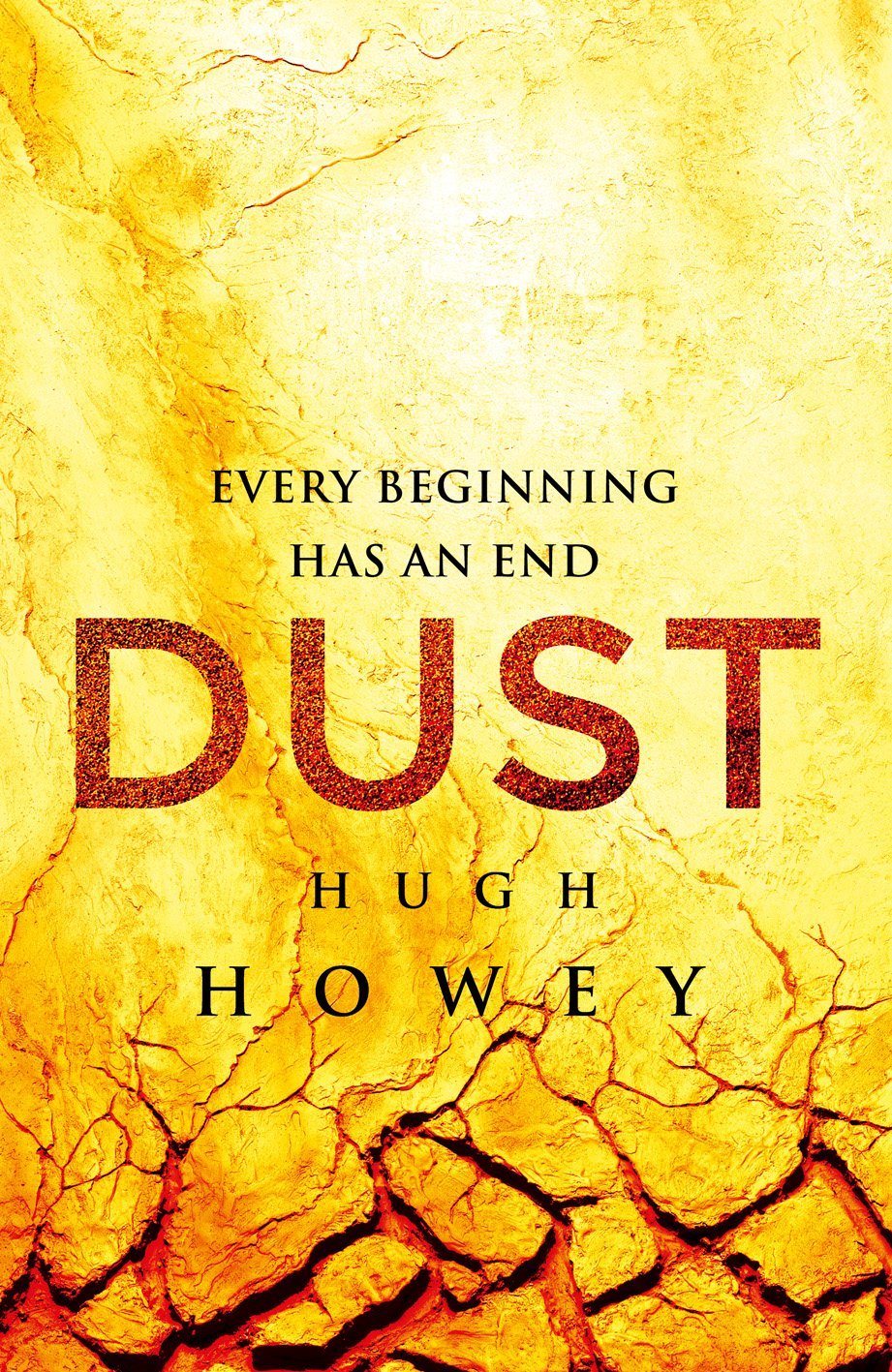
Wool has grown from a novella to a trilogy, now called the Silo Saga. And in Dust, Howey has written an ending that he’s seemingly uncomfortable with. Here’s the ending of the prologue:
“… I’ve got a feeling that nothing good will come of this.”
The entire trilogy is quite a good read, actually. It’s a unique vision of what might happen if America’s political intrigue goes out of control at the same time that weapons of mass destruction are loosed upon us. With the current political landscape of a very liberal President advocating we make war against a regime using WMDs … well, we can only pray that Howey’s work stays fictional.
The idea of saving anything was folly, a life especially. No life had ever been truly saved, not in the history of mankind. They were merely prolonged. Everything comes to an end.
Clearly, this book is coming from a dark place. An end is projected. An end is planned. The protagonists work to elude that tragic end against all odds. The villains of the piece – with a former US Senator leading the group – are finally shown to be mass murderers using an evil computer program to determine the fate of humanity. A dark place, indeed.
Howey moves the plot rather quickly through a complex climax and resolution: perhaps a bit too quickly for my taste. Still a good read, that I recommend if this genre is to your taste.
It’s in Howey’s A Note To The Reader, of all places, that he shows that he’s resolved his demons. By the way, the book’s Epilogue follows the Note. I missed it on my first time through … don’t miss his denouement. Here’s the conclusion of his Note:
This is not the end, of course. Every story we read, every film we watch, continues on in our imaginations if we allow it. Characters live another day. They grow old and die. New ones are born. Challenges crop up and are dealt with. There is sadness, joy, triumph, and failure. Where a story ends is nothing more than a snapshot in time, a brief flash of emotion, a pause. How and if it continues is up to us.
My only wish is that we leave room for hope. There is good and bad in all things. We find what we expect to find. We see what we expect to see. I have learned that if I tilt my head just right and squint, the world outside is beautiful. The future is bright. There are good things to come.
What do you see?
Read the entire trilogy – don’t start with Dust. All three books are available for your kindle, or in paperback, through Amazon. Support Mr. Howey’s independent efforts. He’s doing publishing in a new way, he’s entertaining and he’s making it work. That’s worth our support.

More
Wool: The Power Of Engaging
Indie Reader: Dust (Silo Saga)
Hugh C Howey: It’s The Reader, Stupid
Three stories this week show how much our culture likes bad boys. And girls. All three are blowing up in the media. The blogosphere is erupting with parenting advice and observations about the failures of youth.
I have a different perspective.
We like’m bad.

Miley Cyrus and the unfortunately costumed Robin Thicke were the talk of the VMA awards.
Miley didn’t leave anything to the imagination at the VMA awards last Sunday. Her tongue was hanging out like a hot hound dog. And that’s the nicest thing I can say about her performance during the summer’s # 1 song, performed by that fashion failure, Robin Thicke.
The best observation of her performance, I thought, was from Jacobs Media, who are the leading consultants to rock radio in America. The link to their story is below, but here’s their essential point:
When the best thing a musical genre has going for it is the news that 70 year-old Paul McCartney plans to continue touring, that’s a definite message about where things are headed.
Now you may look at Miley’s latest antics at the VMAs and be outraged. Of course, MTV couldn’t be happier – her performance was better than Fart Man and it couldn’t have come at a better time for a network that doesn’t make the news like it once did.
Why did Miley do what she did? To make herself a (bigger) star.
Did it work? You bet.
Did I watch it? Sure, the next morning. During the live broadcast, when Little Girl came upstairs to tell me I had to see this awful thing that Miley just did, I politely declined. There are some things you just don’t do with your children, at any age. They’re still my kids, even if they are adults.
Was it awful? Yup. But it was the talk of the nation. Isn’t that the goal of a pop star? We like our stars controversial … remember, John Lennon said The Beatles were more popular than Jesus Christ. Miley took a more salacious path, but not a more controversial one. Remember Janet’s wardrobe malfunction? We’ve been here before.
And Miley didn’t even violate the FCC’s rules.
Now, turning to another controversial media sensation.

Johnny Manziel, AKA Johnny Football, has rubbed his thumb & fingers to symbolize money after big plays throughout his young career. It’s a common symbol in the culture, actually, and other players do the same thing. Does it endear him to the audience? Uh, no.
Johnny Manziel won the Heisman Trophy last year, the first freshman to ever win the award as the most outstanding player in college football. He led his Texas A&M team to a great 2012 season, including the only defeat of the eventual national champion, Alabama.
But since he won the Heisman, he’s been a media train wreck. He said he couldn’t wait to get out of College Station (the home of his Texas A&M). It was discovered he was only taking online classes … he wasn’t in classrooms with other A&M students. He was seen flashing money in a casino. He attended sporting events and got VIP treatment … so it had to be explained that he came from oil money, and bought the premium tickets he received.
College athletes can’t receive impermissible benefits (such as free tickets to sporting events) for playing the game, less they incur the wrath of the NCAA.
So that’s what happened to Johnny Football. He was video taped signing autographs, allegedly for autograph brokers. He supposedly signed helmets and jerseys. Why would he do such a thing? According to ESPN’s unnamed sources, he was getting cash to pay for new rims for his car. According to the NCAA … no one would talk. So, they had little proof of why the hottest player in college football would sign autographs for people that wanted to sell them.
Perhaps it was all a misunderstanding? YES, that’s it. It was a little mistake. An inadvertent misstep. So, the NCAA agreed that Texas A&M should suspend their star, sophomore quarterback for the first half of their first game. When Manziel did take the field, he played very well. He didn’t keep his mouth shut, however.
I’m sure that his opponents had their jaws wagging at him throughout the half, and he gave as good as he got, apparently. That earned him an unsportsmanlike conduct penalty, and the wrath of his coach.
And when his coach was chewing on his ear, he seemingly ignored him and walked away. His coach denies that, however. He said his star player reacted appropriately by walking by him without pause while being yelled at.
OK. Good move. That kind of contretemps is why we’ll breathlessly watch Manziel all season. He’s a bad boy, he’s a great quarterback, and everybody wants to see if he veers off the tracks again, or if he grows up on the national stage to become a better football player. It’s the drama that we seek, and he’s bringing it like no one else in college football.
We like’m bad.
Which brings us, inevitably, to the best TV drama of this month, the end of Breaking Bad.

Breaking Bad is the best show on the AMC Network – some would say the best show on television. It’s in the final 4 episodes of its 5th season right now, telling the story of Walter White.
White is a high school chemistry teacher that was diagnosed with cancer in the beginning of the series. In a ploy to build a nest egg for his family while fighting the disease, he uses his expertise in a chemistry lab to become the southwest’s foremost cooker of meth. This seemingly mild-mannered high school teacher lives in the ‘burbs with his wife and two kids … and becomes a stone cold killer.
His loss of any shred of morality over the last 5 seasons has made for wonderful (but violent) television. If you’re not a fan, you’ve got a great opportunity to start at season one and see what Walter White becomes in the final episode, scheduled to air on September 29. You’ll love it.
After all, we like’m bad.
More
Mr. SEC: Manziel and his coach
Washington Post: Manziel Didn’t Diss His Coach
Jacobs Media Blog: Miley, Rock Needs You
Rolling Stone: Breaking Bad’s 10 Best Kills
 Where Is It: 2,300 miles southwest of Honolulu. It’s the only National Park in the southern hemisphere. Flights from Honolulu are scheduled for twice each week; flight time is 5-1/2 hours to get to Pago Pago, the capital city.
The Birth: Congress authorized the Park in 1988, but the culture of Samoa is for land to be owned communally, and as a part of the culture’s verbal tradition. In 1993, the Samoan village chiefs agreed to a 50-year lease for the land that is in the Park.
It Happened Here: A magnitude 8.0 earthquake created a series of four destructive waves that hit the Park on September 29, 2009. 32 people were killed on the islands by the waves. The Park’s visitor center was destroyed, and many cultural artifacts were lost.
Size: The Park is distributed across three separate islands: Tutuila, Ta’u and Ofu. 13,500 acres. 4,500 of those acres are coral reefs and ocean. The Park on the island of Tutuila is accessible by car; the other islands have no developed roads within the Park.
# Visitors: 10,440 visitors in 2012, a park record in its 11th year. November has the biggest attendance; May is the smallest.
Plants: A tropical rainforest covers most of the islands. There are 343 flowering plants and 135 fern species in the Park.
Animals: The only native mammals are three species of fruit bats. Eliminating feral pigs is part of the Park’s mission; the pigs are non-native and harmful to the native ecosystem.
Choices: A side trip is to visit the Manu’a Islands, half an hour flight east of Tutuila Island. Known as the sacred islands of the Territory, their chiefs were the last to sign the Deed of Cession in 1904 handing over control to the United States of America. These lush tropical islands (three in total) are home to less than 2000 people with some of the most dramatic landscapes and the tallest peak, Lata Mountain standing at 3170 feet high. If you are up to the challenge, climb the steps to summit Lata Mountain.
Fees: There are no entrance fees.
Staying There: There is hotel-style lodging on all three islands; camping is prohibited in the park. There is a home-stay program with island residents that is a unique experience: visitors learn island culture up close and personal.
Contact Info:
Interpretation and Education Office
National Park of American Samoa
Pago Pago, AS 96799 USA
684-633-7082, ext. 22 phone
Current Issues: The protection and restoration of the native habitat continues to be a major focus of the Park’s resources. Nearly 100 Crown-of-Thorn Starfish were killed early in 2013, as they are a threat to the Park’s coral reefs. Last year, the Park partnered with a local village to remove all of the invasive tamaligi trees from the native rainforest. A second partnership resulted in an effort to eradicate another harmful invasive species, the pulumamoe, or rubber tree. Over 7,000 native tree saplings have been planted over the last 10 years within the Park.
Don’t Miss This: They call it a day hike: Tuafanua Trail.
Hike up switchbacks from VatiaVillage through lush tropical rainforest to a hidden coastline. At the ridge-top, enjoy ocean views before a steep descent on several ladders with ropes to a quiet, rocky beach and view of Pola Island.

Photo from National Park of American Samoa’s Facebook page.

Photo from National Park of American Samoa Facebook page.

Photo from National Park of American Samoa Facebook page.

Photo from National Park of American Samoa Facebook page.

Photo from National Park of American Samoa Facebook page.

Photo from National Park of American Samoa Facebook page.

Photo from National Park of American Samoa Facebook page.

Photo from National Park of American Samoa Facebook page.

Photo from National Park of American Samoa Facebook page.

Photo from National Park of American Samoa Facebook page.

Photo from National Park of American Samoa Facebook page.

Photo from National Park of American Samoa Facebook page.

Photo of Visitor’s Pavillion, as seen from the radio towers above the Park. Photo courtesy of Larry Fuss.

Photo from National Park of American Samoa website.

Flying foxes, or fruitbats. Photo from National Park of American Samoa Facebook page.

Collared kingfisher at the Pola Islands overlook in the Tutuila portion of the park. Photo from National Park of American Samoa website.

Pacific golden plover. Photo from National Park of American Samoa website.

Photo from National Park of American Samoa Facebook page.

Photo of cardinal honeyeater, segasega mau’u. Photo from National Park of American Samoa website.

Red-footed booby. Photo from National Park of American Samoa website.

Photo from National Park of American Samoa website.

Photo from National Park of American Samoa website.

View of the MilkyWay from the only National Park in the Southern Hemisphere – National Park of American Samoa. Tweeted by US Department of Interior.
More
National Park Service: National Park of American Samoa

New Zealand circa 1905. “Male youths outside tent, probably Christchurch district.” Glass plate by Adam Maclay. Shorpy Historical Photos
More
Shorpy Historical Photos