BAD! It is not OK to wear the US flag. Not as a swimsuit, not as a cape, not as a t-shirt. Not. O. K.
There are rules. How we should display the US Flag is described clearly in something called the US Flag Code. There’s a link below; meanwhile, here are my pet peeves. Far too many citizens are either ignorant or uncaring about how they should display their flag. Let’s try and set that right, OK?
1. You can’t wear the flag.
Section 8d: The flag should never be used as wearing apparel, bedding, or drapery.
Section 8j: No part of the flag should ever be used as a costume or athletic uniform.
I cringe at the Olympics … no, you shouldn’t wrap yourself in the flag. It shouldn’t be on your t-shirt. It shouldn’t be printed on your clothing at all; you can’t wear the flag (there are a few obvious exceptions, such as patches worn on uniforms by our astronauts, military and police. And Boy Scouts!).
2. You can’t imprint flags on napkins. You can’t imprint on commercial items … like credit cards.
BAD! Totally wrong to wipe your mouth on these napkins.
Section 8i: The flag should never be used for advertising purposes in any manner whatsoever. It should not be embroidered on such articles as cushions or handkerchiefs and the like, printed or otherwise impressed on paper napkins or boxes or anything that is designed for temporary use and discard. Advertising signs should not be fastened to a staff or halyard from which the flag is flown.
It’s really simple: you can’t use the flag to promote your business (which is the advertising part). And you can’t imprint the flag on something that’s meant to be thrown away, like napkins or boxes. The flag should be given more respect than that.
3. The flag goes to the right of the speaker on stage.
Section 7k: When used on a speaker’s platform, the flag, if displayed flat, should be displayed above and behind the speaker. When displayed from a staff in a church or public auditorium, the flag of the United States of America should hold the position of superior prominence, in advance of the audience, and in the position of honor at the clergyman’s or speaker’s right as he faces the audience. Any other flag so displayed should be placed on the left of the clergyman or speaker or to the right of the audience.
BAD! This flag needs to be retired immediately.
4. When a flag becomes soiled or tattered, it should be destroyed.
Section 8k: The flag, when it is in such condition that it is no longer a fitting emblem for display, should be destroyed in a dignified way, preferably by burning.
If the flag is showing visible wear, then it is no longer suitable for display. This is an utterly simple concept, but it’s ignored by almost every business that displays the US flag. When flags need to be retired, you can do it yourself in a private ceremony if you wish. Organizations like the Boy Scouts or VFW will also help you destroy worn flags, if you would like their help. I’ve participated in several flag retirements. It’s a very emotional event.
BAD! Katy Perry’s costumes are not to be made of flags.
5. Flags do not fly in the dark unless they are properly lit.
Section 6a: It is the universal custom to display the flag only from sunrise to sunset on buildings and on stationary flagstaffs in the open. However, when a patriotic effect is desired, the flag may be displayed twenty-four hours a day if properly illuminated during the hours of darkness.
The Code is silent on what “proper illumination” would be, but the flag should not be left in darkness. Further, the flag should only fly in inclement weather if it is a weatherproof flag (e.g., nylon, not cotton).
USA’s Bryshon Nellum, Joshua Mance, Tony McQuay and Angelo Taylor celebrate their silver medal in the men’s 4×400-meter during the athletics in the Olympic Stadium at the 2012 Summer Olympics, London, Friday, Aug. 10, 2012.(AP Photo/Matt Slocum)
6. When flags are displayed hanging from a wall, then the blue field is to the left of the observer, or on the flag’s right.
Section 7i: When displayed either horizontally or vertically against a wall, the union should be uppermost and to the flag’s own right, that is, to the observer’s left. When displayed in a window, the flag should be displayed in the same way, with the union or blue field to the left of the observer in the street.
Display the flag properly, or don’t display it at all. Why is this such a hard idea? The rules are very simple, right?
BAD. No way this flag can be put away while showing proper respect for the US flag.
7. A flag should not be touching other objects … like a nearby tree, or a roof.
Section 8e: The flag should never be fastened, displayed, used, or stored in such a manner as to permit it to be easily torn, soiled, or damaged in any way.
This happens in my neighborhood all of the time. People post a flag from the front of their house, but are then oblivious when the flag snags on the roof or nearby tree branches. If you’re not displaying the flag properly … you’re not showing respect. In my view, you’re showing contempt and ignorance.
8. Those really big flags on the field before a sporting event? Not OK.
Section 8c: The flag should never be carried flat or horizontally, but always aloft and free.
Another one of those “don’t get me started” public displays. It is cool to see a really, really big flag … but then when you see how the flag is drug on the ground and wadded up at the end of the display, then I am not entertained at all.
The first US Flag was authorized by the Continental Congress on June 14, 1777. That flag had 13 stars & 13 stripes … if you haven’t read my post on that topic, the link is below. The fact that this resolution was passed on June 14 is why we now celebrate Flag Day on that day.
Resolved, That the flag of the United States be made of thirteen stripes, alternate red and white; that the union be thirteen stars, white in a blue field, representing a new Constellation.
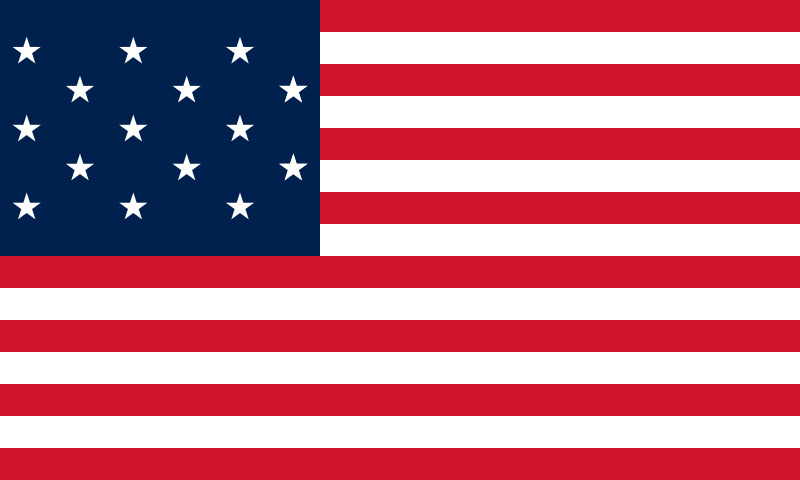
The second US Flag was authorized by the Flag Act of 1794, and it had 15 stripes and 15 stars. That flag would last for 24 years, and see 5 more states enter into the Union before a new law was passed.
An Act making an alteration in the Flag of the United States.
Be it enacted by the Senate and House of Representatives of the United States of America in Congress Assembled, That from and after the first day of May, Anno Domini, one thousand seven hundred and ninety-five, the flag of the United States, be fifteen stripes alternate red and white. That the Union be fifteen stars, white in a blue field.
In 1818, after five more states had been admitted, Congress finally passed a new resolution governing the design of a third US flag … as well as subsequent flags
An Act to establish the flag of the United States.
Be it enacted by the Senate and House of Representatives of the United States of America, in Congress Assembled, That from and after the fourth day of July next, the flag of the United States be thirteen horizontal stripes, alternate red and white: that the union be twenty stars, white in a blue field.
And be it further enacted, That on the admission of every new state into the Union, one star be added to the union of the flag; and that such addition shall take effect of the fourth day of July then next succeeding such admission.
The 20 star flag served for just one year, as Illinois became our 21st star in 1819.
30 stars have been added to this flag. The 50-star version was designed by a student in Ohio in 1958.
Curiosities
Lincoln did not alter the flag after the Confederate states seceded from the US. He did not feel their secession was legal; we fought the Civil War to ensure 1861’s 33-star flag would continue to be our flag.
Though the number of stars did not change, their color did! Many Civil War-era flags used gold stars in the blue field of the flag, as opposed to the more common, specified, white stars. Even though the number of stars and stripes was specified by the 1818 law, the arrangement of those stars was not codified until Roosevelt signed the US Flag Code in 1942.
There are anecdotal stories of flags with gold stripes that were produced in the early- to mid- 20th century. These flags may or may not have been produced by the U.S. Army Quartermaster Depot in Philadelphia (records show they were discussed and recommended by that group). However, there was never any approval and these flags are not in compliance with the 1818 law or the 1942 code that governs the design of the US flag.
There was no official pattern for the stars on the flag until the adoption of the 48-star flag in 1912. The Army and Navy did use standardized designs, but there was variation between flags based on personal preference.
This alternative design of a 36-star flag could have been used from July 4, 1865 until July 3, 1867. A 37-star flag was introduced on July 4, 1867.
A flag protection movement surged in the late 1800’s, but failed to win federal legislation. States began to pass their own laws on how to treat the US flag, and by 1932, all states had adopted flag desecration laws.
These laws were superseded by the US Flag Code which was ratified in 1942. The US Supreme Court has since ruled that freedom of speech, guaranteed by the First Amendment to the US Constitution, trumps any flag desecration laws. The Flag Code is a guide to how citizens should treat the US flag: there are no penalties for not following the Code.
The current 50-star flag has been the US flag the longest of the 27 different flags that have waved over the United States. The flag with the second longest tenure was the 48-star flag, which was the US flag for 47 years, 1912 – 1959.
The 50-star flag became the official US flag on July 4, 1960: the first July 4th after Hawaii was admitted to the union.
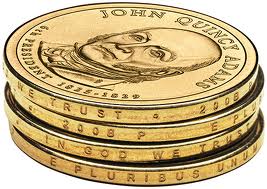
I’m a former numismatist. Gave it up … but I’m intrigued by efforts to introduce the new dollar coins. Why aren’t you?
Here’s the quick summary: dollar coins are cheaper to make & maintain than dollar bills. If we just lose the bills and convert to coins, the government (that we pay for) would save millions and millions of dollars.
Here’s what the General Accounting Office said in 2012:
Over the past 40 years, many nations have replaced lower-denomination notes with coins as a means of providing a financial benefit to their governments. GAO has reported five times over the past 22 years that replacing the $1 note with a $1 coin would provide a net benefit to the government of hundreds of millions of dollars annually.
These are the 2013 issues of the Presidential Dollar series. The mint is no longer making them for general circulation … until the backlog from prior years is eased into circulation.
There’s research that says Americans are overwhelmingly in favor of keeping the dollar bills. Convenience is what matters, apparently.
There’s research that says that when they hear of the cost, though, Americans are 2:1 in favor of converting to the coins.
I’m not a big fan of carrying coins in my pocket, but changing from dollar bills to dollar coins? I’m a fan.
And the Presidential series of dollar coins with the edge lettering are really cool. I’m a fan!
The rattlesnake, a reptile found only in the Americas, was the first animal used to symbolize the colonies prior to the creation of the USA.
When the colonies began to chafe under English rule, it was observed that England was sending convicts to America. Benjamin Franklin suggested that we return the favor by sending them rattlesnakes. His thoughts were published in the Pennsylvania Gazette on May 9, 1751:
“In the Spring of the Year, when they first creep out of their Holes, they are feeble, heavy, slow, and easily taken; and if a small Bounty were allow’d per Head, some Thousands might be collected annually, and transported to Britain. There I would propose to have them carefully distributed in St. James’s Park, in the Spring-Gardens and other Places of Pleasure about London; in the Gardens of all the Nobility and Gentry throughout the Nation; but particularly in the Gardens of the Prime Ministers, the Lords of Trade and Members of Parliament; for to them we are most particularly obliged…I would only add, That this Exporting of Felons to the Colonies, may be consider’d as a Trade, as well as in the Light of a Favour. Now all Commerce implies Returns: Justice requires them: There can be no Trade without them. And Rattle-Snakes seem the most suitable Returns for the Human Serpents sent us by our Mother Country. In this, however, as in every other Branch of Trade, she will have the Advantage of us. She will reap equal Benefits without equal Risque of the Inconveniencies and Dangers. For the RattleSnake gives Warning before he attempts his Mischief; which the Convict does not.”
I like Ben Franklin. And if his plan would have rid the country of snakes, I’m sad it was never implemented.
Known for their fierce response when disturbed, the rattlesnake became a prominent feature on early battle flags in the Revolutionary War. Rattlesnakes were native throughout the original 13 colonies.
A rattlesnake on a flag was first used as a symbol for US Marines attached to the seven ship United States Navy. General George Washington established the navy to make raids on English shipping, and the Second Continental Congress approved the creation of five companies of Marines to accompany the Navy on the first mission. Those Marines, enlisted in Philadelphia, carried drums painted yellow with a 13-rattle rattlesnake and the motto “Don’t Tread On Me.”
Continental Colonel Christopher Gadsden presented what has become known as the Gadsden flag to Commodore Esek Hopkins to serve as the personal standard of his flagship.
For a time, it was thought that the First Navy Jack was used in the Revolutionary War by the Navy, but those accounts were apparently in error. A striped jack was used in the war, but there’s no evidence that it had a snake on it. That tradition took hold, however, and the symbol is now used in today’s US Navy.
Said to be the first political cartoon, Benjamin Franklin’s “Join or Die” illustration was first published in the Pennsylvania Gazette, May 9, 1754. It indicated N.E. for New England at the head, and then identified the colonies in order going south down the coast.
200 men from the Virginia colony fought under this flag in 1775.
Various versions of the Gadsden Flag had an apostrophe (or not), a grass field for the snake to spring from (or not), and the snake facing left or right.
The First Navy Jack is now flown on the oldest navy ship in service: currently the aircraft carrier USS Enterprise.
Today, sailors fighting in the war on terror wear First Navy Jack patches on their camouflage uniforms. Other U.S. military personnel, particularly special operations personnel, have worn First Navy Jack embroidered patches as well.
President George Washington signed into law the Flag Act of 1794. It changed the design of the US flag … we now had 15 states with the addition of Vermont and Kentucky, and needed an updated flag.
Five Presidents served under this flag: George Washington (1789-1797), John Adams (1797-1801), Thomas Jefferson (1801-1809), James Madison (1809-1817), and James Monroe (1817-1825)
This flag had 15 stripes and 15 stars, and would be the Star Spangled Banner seen by Francis Scott Key flying over Fort McHenry in 1814. Note that the circle of stars is gone … so perhaps in 1794, at least, the design of the Hopkinson flag was preferred over the Betsy Ross and Cowpens flags?
The Star Spangled Banner flag with 15 stars and 15 stripes.
“By Dawn’s Early Light” is the 1912 painting by Edward Moran showing Francis Scott Key on the morning of September 14th, 1814.
Key wrote the poem that become The Star Spangled Banner on the back of a letter he had in his pocket (see below!). The song was later set to a popular British tune, “The Anacreontic Song.” It was officially designated our national anthem by a congressional resolution, signed by Herbert Hoover in 1931.
The Star Spangled Banner
O say can you see by the dawn’s early light,
What so proudly we hailed at the twilight’s last gleaming,
Whose broad stripes and bright stars through the perilous fight,
O’er the ramparts we watched, were so gallantly streaming?
And the rockets’ red glare, the bombs bursting in air,
Gave proof through the night that our flag was still there;
O say does that star-spangled banner yet wave,
O’er the land of the free and the home of the brave?
On the shore dimly seen through the mists of the deep,
Where the foe’s haughty host in dread silence reposes,
What is that which the breeze, o’er the towering steep,
As it fitfully blows, half conceals, half discloses?
Now it catches the gleam of the morning’s first beam,
In full glory reflected now shines in the stream:
‘Tis the star-spangled banner, O! long may it wave
O’er the land of the free and the home of the brave.
Francis Scott Key’s original manuscript of his “Star-Spangled Banner” poem. It is now on display at the Maryland Historical Society.
And where is that band who so vauntingly swore
That the havoc of war and the battle’s confusion,
A home and a country, should leave us no more?
Their blood has washed out their foul footsteps’ pollution.
No refuge could save the hireling and slave
From the terror of flight, or the gloom of the grave:
And the star-spangled banner in triumph doth wave,
O’er the land of the free and the home of the brave.
O thus be it ever, when freemen shall stand
Between their loved home and the war’s desolation.
Blest with vict’ry and peace, may the Heav’n rescued land
Praise the Power that hath made and preserved us a nation!
Then conquer we must, when our cause it is just,
And this be our motto: “In God is our trust.”
And the star-spangled banner in triumph shall wave
O’er the land of the free and the home of the brave!
Here’s the truth: Betsy Ross didn’t sew the first American flag. Here’s more truth: no one really knows who created the first flag, but the smart money seems to be on Francis Hopkinson, a delegate to the second Continental Congress and a signer of the Declaration of Independence! He actually submitted a bill to the Congress for services rendered in designing the flag.
Which they refused to pay, as many people were involved in the design. According to Congress. And they never lie.
The Betsy Ross legend, come to find out, didn’t even become public until 1870, 34 years after her death and nearly 100 years after the American Revolution. The story was first presented in a paper by William J Canby, Ross’ Grandson, in a paper presented to the Historical Society of Pennsylvania. Canby declared that in early 1776, a secret committee from the Continental Congress came to Betsy Ross, a single mother running an upholstery business, to sew the flag based on a design George Washington sketched on Betsy’s table. The secret committee included Betsy’s uncle, George Ross, Robert Morris (perhaps the wealthiest man in America at the time) , and George Washington – who had the pew next to her at church.
The iconic moment, captured in many paintings, was when Betsy demonstrated to the gentlemen that rather than using the 6-pointed star that they proposed, a 5-pointed star would be better as it could be cut with one motion of her scissors.
But there’s no proof this ever happened, except for family stories passed down within the Ross family … which kept it a secret for almost a hundred years.
However, Canby’s story captured the imagination of America and it became a part of the public discourse … and was generally accepted as true. I learned it in school as fact. How about you?
The Basics
To figure out who made the actual first flag for the United States of America, there are a few basic questions to be answered.
1. When could such a flag have been made? Not before there was a nation, certainly. The Declaration of Independence was not ratified until July 4, 1776 … and Ross had received a commission to make the US flag months earlier? It seems difficult to designate a flag before you have a nation.
HOWEVER, historians have cited the “first” flag as the Continental Colors, which was used on both US ships (before there was a US) and at garrisons of the Continental Army. This flag was used until a more official flag was designated in 1777.
The Grand Union Flag, AKA The Continental Colors, was first hoisted on the ship Alfred, in Philadelphia on December 2, 1775, by Lt. John Paul Jones.
2. Who had the authority to create a flag to represent the country? A “secret committee” of the Continental Congress? I don’t think so. Even if Washington — the leader of our armed forces in time of war! — made the time to meet with a flag maker, it strains credulity to assume there would be no contemporary proof of the event. It’s also possible Washington simply needed a standard or battle flag for his army … that kind of flag has been very common through history. Armies “rally to the flag.”
3. Who designed it, and who made it? We’ll never know.
Finally, on June 14, 1777 the Continental Congress adopted the following: Resolved: that the flag of the United States be thirteen stripes, alternate red and white; that the union be thirteen stars, white in a blue field, representing a new constellation.
There was no provision for exactly how the stars should be arranged, nor what the size of each element should be. Those details varied in the subsequent years.
Here’s the “Betsy Ross Flag” that I grew up assuming was our nation’s first flag, along with two others that also fulfill the Congressional Resolution of 1777.
It’s true that Betsy Ross made flags, and may well have sewn this flag. Was it official? No more than the other contemporary designs that fulfilled the Continental Congress’ resolution.
This is the flag that Hopkinson billed Congress for the creation of. It certainly fulfills their requirements laid out in the June 1777 resolution.
The Cowpens Flag was said to have been carried by William Batchelor of the 3rd Maryland Regiment at the Battle of Cowpens, January 17, 1781.
Originally entitled Yankee Doodle, this is one of several versions of a scene painted by Archibald M. Willard in the late nineteenth century that came to be known as The Spirit of ’76. Often imitated or parodied, it is one of the most famous images relating to the American Revolutionary War. The life-sized original hangs in Abbot Hall in Marblehead, Massachusetts. The painting uses a Cowpens flag.
There is a belief among many that the first “official” US flag was raised at a summer-long encampment of the Continental army at Middlebrook, New Jersey in 1777. That flag is assumed to be the Hopkinson flag, not the Betsy Ross flag.
If the Continental Congress approved a specific version of the flag, that was never recorded. We do not know which design was the first accepted flag of the United States of America. That distinction was apparently not important to our founding fathers, and didn’t become important until truth seekers began to clamor for an answer about 100 years after the fact.
And that is frustrating. Life was much simpler in grade school, wasn’t it?
Betsy Ross showing Major Ross and Robert Morris how she cut the stars for the American flag; George Washington sits in a chair on the left. Painting by Jean Leon Gerome Ferris (1863-1930).
The Birth of Old Glory, by Percy Moran, has Betsy Ross showing her flag to George Washington and three other gentlemen. Painting was done circa 1917.
Charles Weisgerber’s 1893 painting of “The Birth of Our Nation’s Flag” helped make Betsy Ross one of the most famous women in American history. Since no images of Ross existed, Weisgerber created her face from photographs of her daughters and other female relatives. The publication of this illustration – in a book authored by Ross’ descendants, no less – cemented her place in American lore.
Summer’s End. Lexington Green, 11 September 2002. Photo taken in Minute Man National Historical Park. Sculpture : “Minuteman” by sculptor Henry Hudson Kitson (1863-1947), dedicated April 19, 1900. Erected 1899 : SIRIS
I believe this image explains America’s issue with gun control as well as any that I’ve seen. In our hearts, we’re still minutemen, passionately defending the right to bear arms so we can throw off the oppression of a distant, unresponsive government.
No question in my mind that that is exactly what the constitution is talking about.
Unfortunately, tragedy still haunts us, even though we threw off the shackles of that government long ago. I believe we’re about to see a very frank discussion in the federal government about the limits of the 2nd Amendment. For example … do you believe that a suspected terrorist should have the right to buy a gun in America? They do.
But here is what American thinks, according to a 2009 study by The Word Doctors conducted by Dr Frank Luntz and commissioned by Mayors Against Illegal Guns:With such overwhelming support among all Americans — including NRA members — why do we still allow gun sales to suspected terrorists? If they can’t fly in an airplane, why should they be able to purchase an assault rifle?
In September, 2008, President Obama said: “I believe in the Second Amendment…. I will not take your shotgun away. I will not take your rifle away. I won’t take your handgun away… I am not going to take your guns away.”
Perhaps he should have said … well, something a bit less right of center? I can’t imagine that he was lying at the time. You know how I feel about that.
More
Kudos to a great blog, Millard Fillmore’s Bathtub, which is where I first saw the photo of the “Minuteman.”
Massachusetts Secretary of the Commonwealth, center, carries a ballot box containing the 12 Massachusetts electoral votes for Vice President Al Gore during the Electoral College voting at the Statehouse Dec. 18, 2000, in Boston. Pool Photo/Getty Images
Americans don’t really vote for President or Vice President. We vote for a secret group of “Electors” that participate in a process called the Electoral College. That’s how it’s mandated in the Constitution, and then revised by the 12th Amendment. Your vote matters, but you don’t know who you voted for.
You didn’t vote for Obama or Romney. You did vote for a slate of state electors that you probably have never even heard of — electors that hold the fate of our nation in the palms of their hands. Here’s how we really elect our President. And believe me, in our litigious society, it is all about the details.
A 1976 Elector casts her ballot. New York delivered 41 votes to Jimmy Carter.
1. You don’t vote for the Presidential candidate of your choice. Ever. You do vote for a slate of Electors.
2. The number of Electors for each state is the same number as their Congressional delegation … 1 for each Senator and US Representative. Washington DC also has 3 electors.
3. Those Electors are selected by a process unique to each state. In California, the process is different for each party.
4. The Electors cannot be a member of Congress or an employee of the federal government.
5. The Electors are under no federal obligation to vote for the candidate that they are pledged to, though 25 states and Washington, DC do require them to do so. The other 25 states … electors can vote for anyone they choose, becoming “faithless electors.”
6. The Electors are selected on the Tuesday following the first Monday in November in years divisible by 4 (yes, that’s our election day). The Electors, in turn, vote on the December Monday following the 2nd Wednesday in each State Capitol (December 17 this year). They must vote for a President and a Vice President separately, and one of those must not be from their state. The votes are then sealed.
Note that most states have a “winner take all” structure for awarding their electoral votes, but that is a state decision. In Maine and Nebraska, the electors are awarded individually to the winner of each congressional district’s votes, with the two extra votes going to the over-all state winner.
The President of the Senate opens each state’s votes in front of a joint session of Congress on January 6.
7. The President of the Senate then opens and counts the votes in front of both houses of Congress on January 6.
8. If no one receives a majority of votes (270), then the US House of Representatives chooses the President from the Top 3 candidates with each state casting one vote. If no Vice Presidential candidate receives a majority, then the Senate chooses the Vice President from the Top 2 candidates.
Oddities in the history of the Electoral College:
1800 – an electoral tie, decided amicably in the House
1824 – debatable if the popular vote winner won, especially since not all states even used a popular vote
1876 – amid vote tampering and political machinations, the result seems to not reflect the popular vote
1888 – the clearest 19th century example of the popular vote winner (Democrat Samuel J Tilden) not being the electoral winner (Republican Rutherford B Hayes)
2000 – Gore won a plurality (but not a majority) of the national popular vote by over 540,000. For the electoral college, however, Florida was a mess with hotly contested recounts over ballots that were allowed, or not allowed, in the official count. Ultimately, the US Supreme Court ruled that the official count submitted by Florida was in fact their official result, and Bush won the electoral college 271-266 with one faithless elector abstaining.
None of these incidents degraded the legitimacy of the popular vote, nor the electoral college. Is this because of a better informed populace? A great election system first implemented in 1804, but still working in spite of World War, economic turmoil and societal upheaval? Or are we just staying lucky?
The reality is that only swing states are active sites for modern campaigns. Here’s how the 2012 election looked in late October.
You’ll see pro and con viewpoints over the next few days, I’m sure. Here are three key points to remember:
1. The only way the system changes substantially is by constitutional amendment. That is not an easy thing to do … 3/4 of the states must approve it. Typically, 2/3 majorities in both the House & Senate are required just to propose it. That sounds like Washington these days, right?
2. States can change the way they allocate their Electoral votes, but there is currently no groundswell of public opinion for that to happen. 48 states and the District of Columbia all do it the same way: winner take all.
3. It’s worked over 50 times since the 12th amendment passed, through all kinds of societal turmoil.
I believe the bigger issue today is why we continue to have so many varieties of registration, voter identification at the polls and the actual ballots themselves. I think fixing those issues is much more important than changing the wacky electoral college procedures that we’ve had for over 200 years.
We vote. The Electors vote. The President is peacefully inaugurated on January 20. It has been the American way.
Whatever the alternative systems are that you’re going to read about … there is no proof they will work any better. So why should we change, exactly?
More
The Electoral College by William C Kimberling, FEC Office of Election Administration, rev. May 1992
The song was written in 1918, and then set aside. Berlin thought it was “not appropriate” for the project he was working on.
It sat on a shelf for 20 years.
In 1938, Berlin wanted to find a song that properly expressed the peaceful sentiments that he felt America needed to hear. Kate Smith, who was perhaps the most popular American singer of her day, wanted a new song … and after trying to write a new one, Berlin remembered the song from 20 years ago. He asked his assistant to get it out of a trunk.
He tweaked a few lines, and it was the closing number on Smith’s radio show on November 10, 1938. It was an instant sensation, and Smith continued to sing it every week on her show. It was read into the Congressional record. There was a movement to make it our new national anthem … that Smith discouraged. But the popularity of the song was immense, and Smith continued to sing it.
The song was “God Bless America.”
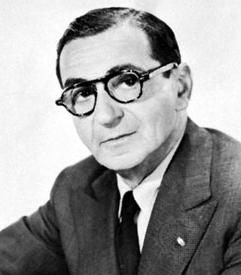
Irving Berlin donated all his royalties, in perpetuity, to the Boy Scouts and Girl Scouts of America. He especially wanted those royalties to go to the areas in greatest need, and the money has gone to the New York Area Councils recently.
In the 70s, the song achieved a new level of popularity … as a hockey anthem. The Philadelphia Flyers adopted it as a good luck charm, and played it before many games … on their march to the Stanley Cup. They repeated that feat — along with a live performance by Smith — when they won the 1975 Stanley Cup. That was great for hockey, and great for Scouting.
Here’s a clip that recreates the national premiere of the song on Kate Smith’s # 1 nationally radio show. This dramatization was a part of “The is the Army,” a 1943 movie starring Ronald Reagan!
I’ve seen two parodies of this illustration this week; I thought you might enjoy hearing the story of how the original came to be. This is from the National Archives.
It started with President Franklin D. Roosevelt’s Message to Congress on January 6, 1941, in what became known as the “Four Freedoms” speech :
“We look forward to a world founded upon four essential human freedoms. The first is the freedom of speech and expression–everywhere in the world. The second is the freedom of every person to worship God in his own way–everywhere in the world. The third is freedom from want–which, translated into world terms, means economic understandings which will secure to every nation a healthy peacetime life for its inhabitants–everywhere in the world. The fourth is freedom from fear–which, translated into world terms, means a world-wide reduction of armaments to such a point and in such a thorough fashion that no nation will be in a position to commit an act of physical aggression against any neighbor–anywhere in the world.”
In 1941, basic human freedoms were under world-wide attack. Europe was under Nazi domination. Japan was expanding its war from China to an advance into Indochina and the Dutch East Indies. Roosevelt anticipated the necessity of war, and sought to inspire the American people with a vision of the world accepting the American ideals of individual liberties.
Norman Rockwell was so inspired by this speech that he created a set of paintings on the “Four Freedoms” theme. He translated Roosevelt’s vision of freedom into scenes of everyday American life. He offered these painting to the US government for its use, but that offer was initially rebuffed. The Saturday Evening Post, one of the nation’s most popular magazines of the time, purchased the rights to the paintings and published them. They proved wildly popular, and eventually served as the centerpiece of a massive US war bond drive that helped explain the goals of the war.


 More
More