Be prepared for sunrise splendor at Cumberland Gap National Historical Park. It’s a thrill watching the sun paint the sky from the park’s Pinnacle Overlook. Here you have views of Kentucky, Virginia and Tennessee. On clear days, you can even see the Great Smoky Mountains in North Carolina – a sight that’s 100 miles away! Photo by Volunteer Harold Jerrell, National Park Service. Posted on Tumblr by the US Department of the Interior, 4/28/17.
Male western tanager on Seedskadee National Wildlife Refuge. Photo by Tom Koerner/USFWS. Posted on Flickr by the US Fish & Wildlife Service; taken 5/25/17.
A red necked phalarope (adult male) on Seedskadee National Wildlife Refuge. Photo by Tom Koerner/USFWS. Taken 5/21/17 & posted on Flickr by the US Fish & Wildlife Service.
The American bittern is a rare sight…not because they are uncommon, but because of their secretive, solitary nature and streaky camouflage. They are more commonly heard than seen. Their call is an odd sound that could be described as “gulping”. Their nicknames include: “stake-driver,” “thunder-pumper,” “water-belcher,” “mire-drum, and “shy-poke”. They commonly eat fish, frogs, and insects, and have the ability to focus their eyes downward (making them appear cross-eyed at times). The bittern will stand completely still and point its bill into the air to blend in with the vegetation around it. This bittern is using a wetland protected by a FWS wetland easement in the Kulm Wetland Management District in North Dakota. Photo by Krista Lundgren/USFWS. Taken 5/16/17 and posted on Flickr by the US Fish & Wildlilfe Service.
Two of These Do Not Belong… This red-winged blackbird nest on the Baltzer WPA in the Kulm Wetland Management District has two eggs that don’t belong to the blackbird. The two white and brown speckled eggs are those of a brown-headed cowbird. Female cowbirds do not build nests of their own, but rather lay their eggs in other birds’ nests. Cowbirds are one of the most common “brood parasites”. Their young are then raised by the host parents, sometimes to the detriment of their own young. Photo Krista Lundgren/USFWS. Photo taken 6/8/17 and posted on Flickr by the US Fish & Wildlife Service.
Mountain bluebird on Seedskadee National Wildlife Refuge Photoby Tom Koerner/USFWS. Taken on 6/15/17 and posted on Flickr by the US Fish & Wildlife Service.
Yellow headed blackbird on Seedskadee National Wildlife Refuge. Photo by Tom Koerner/USFWS. Taken 6/8/17 & posted on Flickr by the US Fish & Wildlife Service.
Cinnamon teal on Seedskadee National Wildlife Refuge Photo by Tom Koerner/USFWS. Taken 6/5/17 and posted on Flickr by the US Fish & Wildlife Service.
Greater sage-grouse on Seedskadee National Wildlife Refuge Photo by Tom Koerner/USFWS. Taken on 6/5/17 and posted on Flickr by the US Fish & Wildlife Service.
A Brewer’s sparrow perched on a Wyoming Big Sagebrush at Wyoming’s Seedskadee National Wildlife Refuge. Photo by Tom Koerner/USFWS. Taken on 6/5/17 and posted on Flickr by the US Fish & Wildlife Service.
White-tailed prairie dog on Wyoming’s Seedskadee National Wildlife Refuge. Photo by Tom Koerner/USFWS. Taken 6/5/17 and posted on Flickr by the US Fish & Wildlife Service.
Horned lark on Seedskadee National Wildlife Refuge Photo by Tom Koerner/USFWS. Taken 6/8/17 and posted on Flickr by the US Fish & Wildlife Service.
As night falls on Devils Tower National Monument, it transforms from a place of darkness into a place of wonder. Thousands of twinkling, glittering stars dot the night sky over an astounding geologic feature that protrudes out of the rolling prairie surrounding the Black Hills. Stay for nature’s night show at Wyoming’s Devils Tower – it’s worth it! Photo by National Park Service. Posted on Tumblr by the US Department of the Interior, 4/18/17.
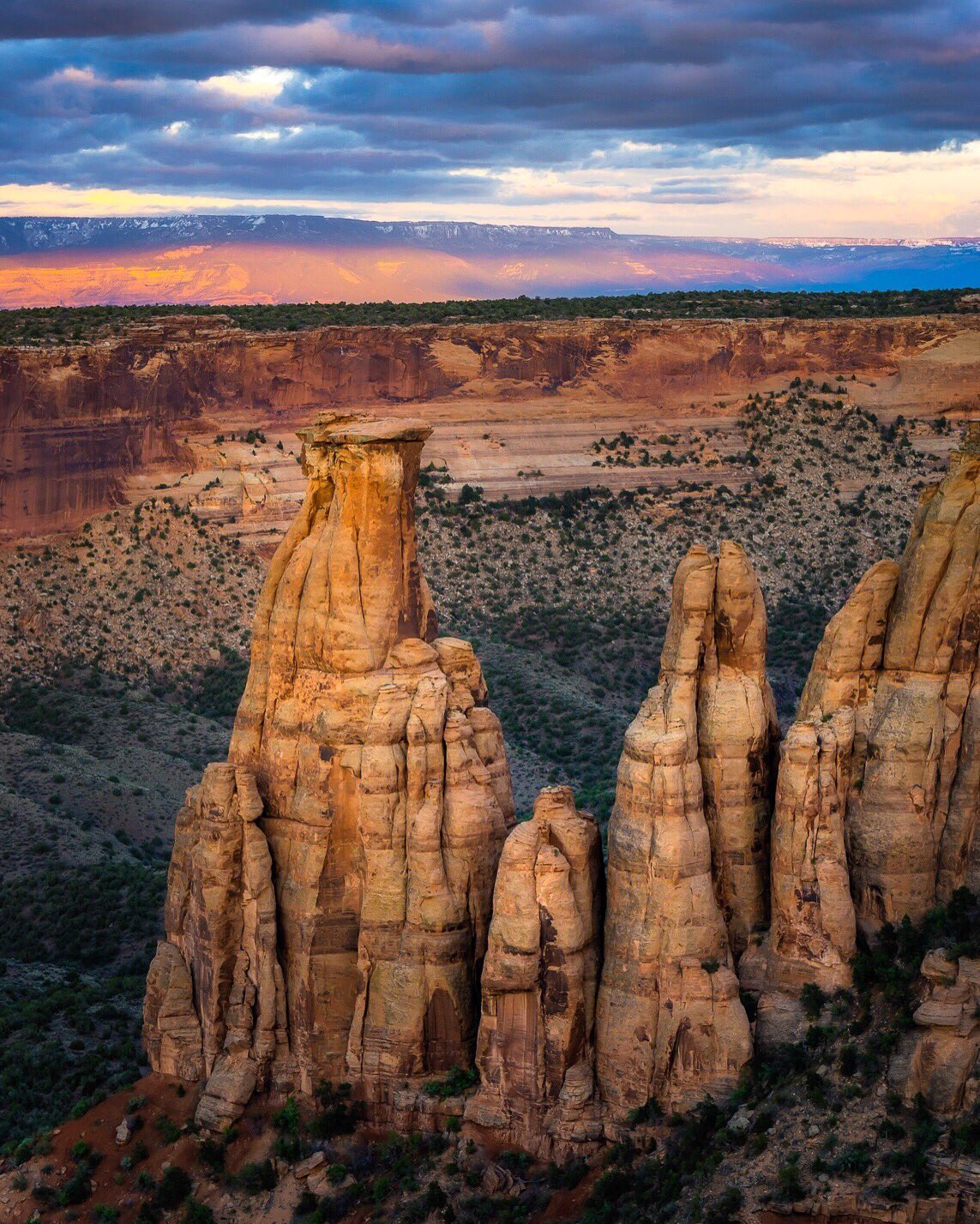
Enjoy one of my favorite National Parks in Utah: Zion. Then, just down the road, there are more trails to explore at the Red Cliffs National Conservation Area.
Purple Locoweed The milkvetch, locoweed, and crazyweeds can be very difficult to identify. The locoweeds and crazyweeds can cause “loco” (crazy) poisoning in cattle if eaten in enough quantity. These flowers are common in mid to late spring on North Dakota prairies. Photo by Krista Lundgren/USFWS. Posted on Flickr by the US Fish & Wildlife Service 5/25/17.
Sacramento River Bend Outstanding Natural Area in California includes expansive rolling hills of blue oak and lush forests surrounding the Sacramento River and its tributaries. The beautiful and diverse habitat – home to bald eagles, osprey, deer and salmon – offers natural beauty and solitude paired with numerous recreation opportunities, sunrise to sunset. Photo by Bob Wick, Bureau of Land Management. Posted on Tumblr by the US Department of the Interior, 4/13/17.
After its running-on-water takeoff, this lesser scaup raises its landing gear and flaps to gain altitude. Photo by Krista Lundgren/USFWS. Tweeted by the US Fish & Wildlife Service, 5/4/18.
Male yellow-headed blackbirds (like this one) arrive to establish territories on wetlands ahead of the arrival of the females. Females will build a nest in vegetation (like cattails or bulrushes) over the water within a male’s territory. Photo Credit: Krista Lundgren/USFWS. Photo taken on 4/18/17 and tweeted by the US Fish & Wildlife Service.
American kestrel taking in this beautiful Monday on Seedskadee National Wildlife Refuge. Posted on Facebook by the US Fish & Wildlife Service, 5/1/17.
A sage thrasher perched on a Wyoming big #sagebrush. Photo by Tom Koerner/USFWS. Posted on Facebook by the US Fish & Wildlife Service, 5/2/17.
Swan family, tweeted by the US Fish & Wildlife Service, 5/12/17.
A pair of greater sandhill cranes react to the approach of a bald eagle. The bald eagle is closing in on a sandhill crane colt (juvenile) hidden nearby. Both of the adult sandhill cranes aggressively drive the bald eagle from the area. Photo: Tom Koerner/USFWS. Taken on 5/15/17 and posted on Flickr by the US Fish & Wildlife Service.